Connecting Robot Software, Field Deployments and Fleet Operations
Connecting robot software development, site deployments and robot fleet oversight.
Schedule a Strategy Call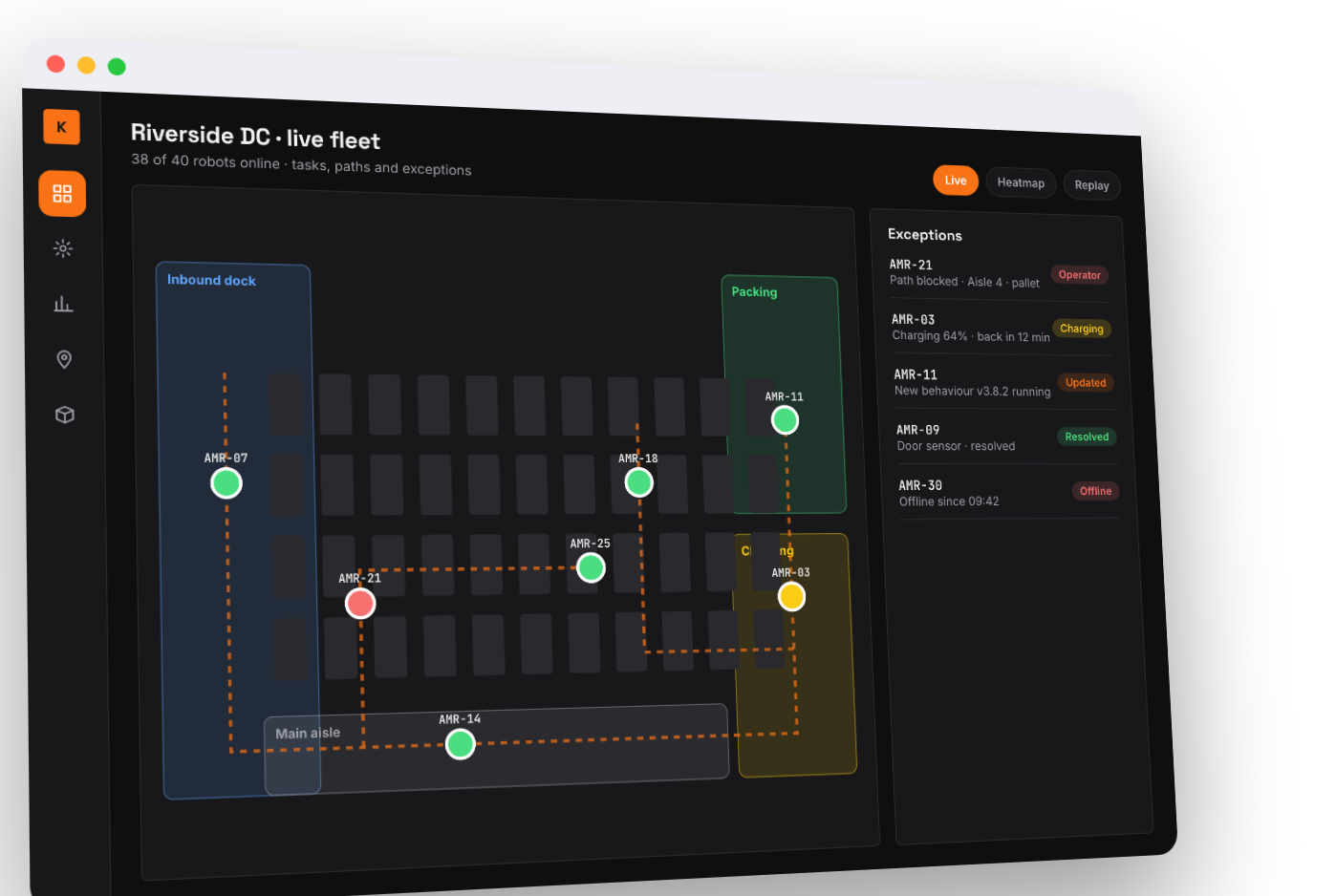
At a Glance
Project name
Kinforge
Industry
Robot Systems
Service offered
Product Design Study & Robotics UX Mapping
Kinforge is a robotics software concept for teams building and running autonomous mobile robots. It connects behavior design, simulation, site configuration and fleet visibility so engineers and operators can follow robot task context.
The proposed workspace links development tools with deployment and operational views. Engineers would review behavior and configuration changes, while site teams monitor tasks, robot status and exceptions against the deployed system.
This concept shows how robotic software could connect engineering and fleet operations, with staged testing, controlled changes and operator input.
1
The Challenge
The brief addresses four key gaps: fragmented development context, site setup in separate tools, software changes without clear run context and limited fleet visibility.
-
Fragmented Build Work
Robot behaviors, configuration and test results can sit in separate tools. Engineers need key context to review how components work together.
-
Site Setup in Silos
Site maps, zones and task definitions can become detached from robot behavior. Deployment teams need operating context together before testing site setups.
-
Release Review Gaps
Behavior and configuration changes can be unclear across robots. Teams need clear versions, test context and release records before release review.
-
Fleet Alerts Lack Key Context
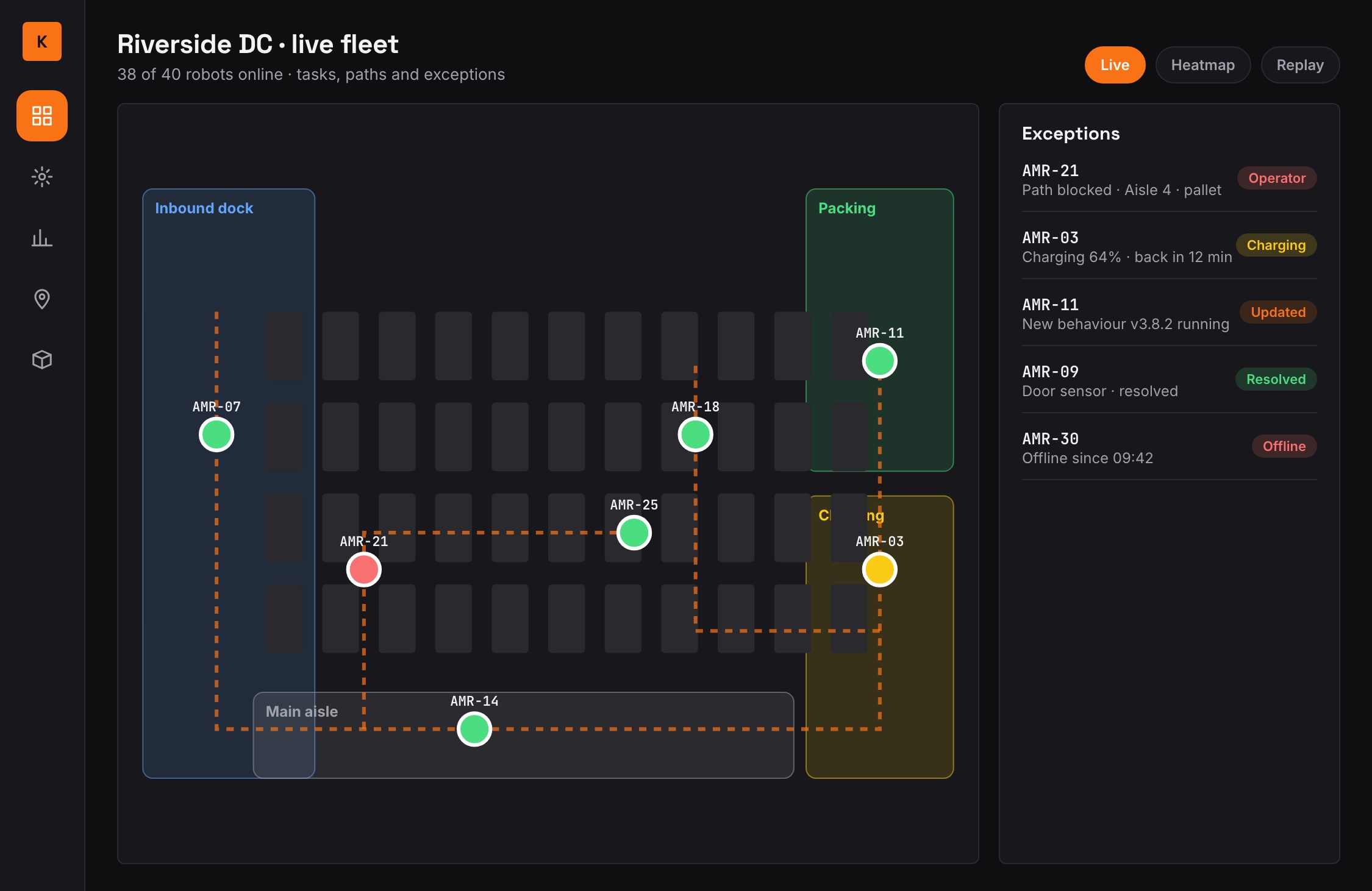
A task failure may be hard to investigate from a status alert alone. Operators need robot health, mission state and an event history together before deciding how to respond.
2
The Approach
The design links robot behavior development with site setup and fleet review. Configuration, simulation findings and release records would be connected so teams can check changes in context.
-
1
Map Behavior to Tests
Connect clear behavior definitions with configuration and simulation context. Give engineers tools to inspect components and review test results before release.
-
2
Connect Site Setup With Tasks
Organize maps, zones, paths and task definitions around a site. Deployment teams would review the setup and test planned missions before approving changes for the site’s environment.
-
3
Make Releases Clear
Link software versions and configuration changes to test findings. Define staging, approval and reversion flows so engineers can review changes to a system before deployment.
-
4
Connect Fleet Status With Context
Show robot health, tasks and event history in operations views. Let approved operators inspect exceptions and follow set intervention procedures.
3
The Outcome
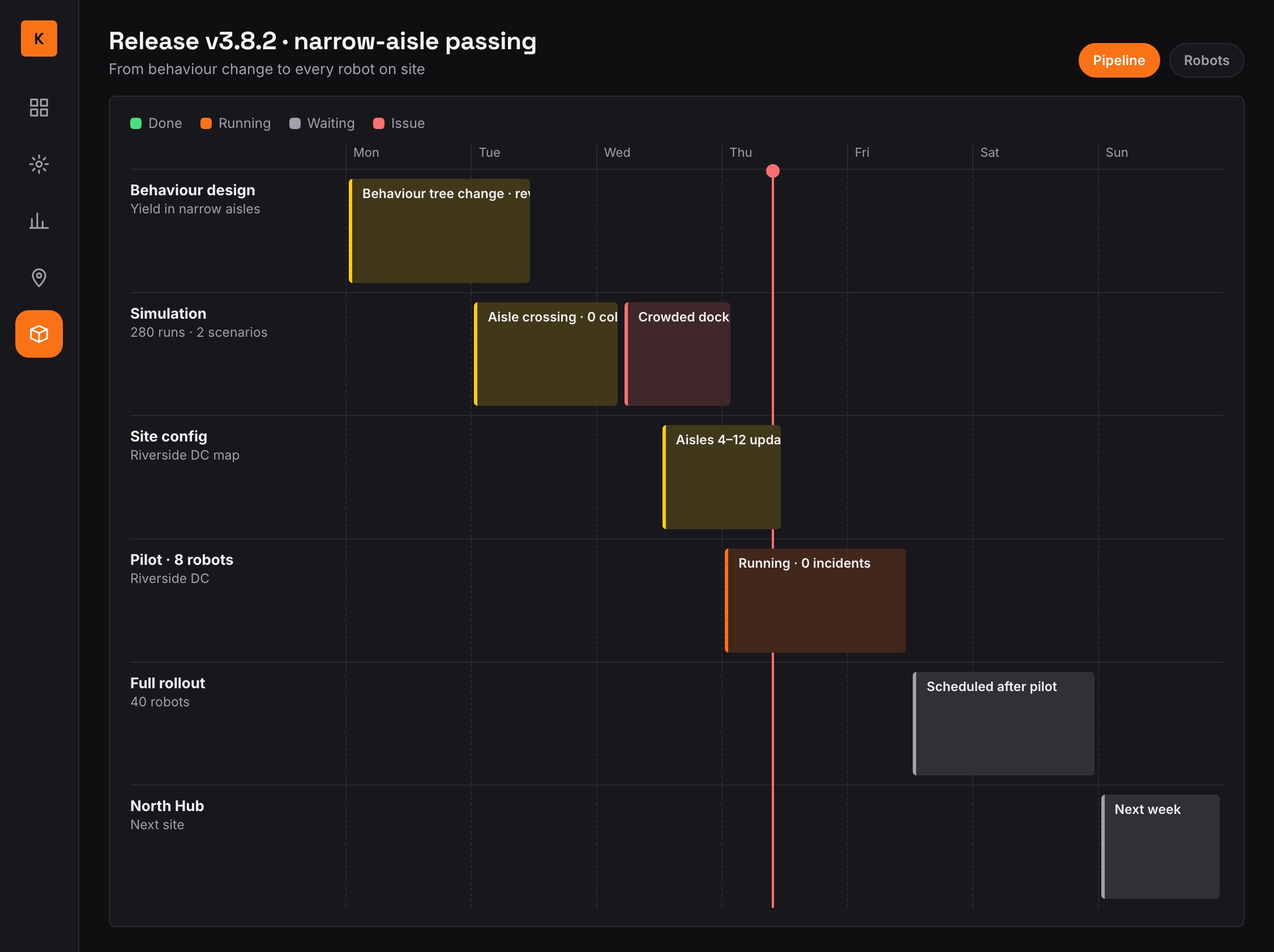
The experience connects behavior development, site configuration, release review and fleet overview in a robot team workspace.
-
Build With Data
Engineers would inspect behavior components and configuration with simulation findings. Shared context would support review of software changes before teams prepare releases.
-
Site Setup in View
Deployment teams would review maps, zones and task definitions in one site context. Simulation findings would inform site test plans before changes reach the deployment site.
-
Release Review
Version and configuration records would show a robot’s planned changes. Engineers could review test findings and approval status before deployment, with a set reversion flow.
-
Fleet Work Explained
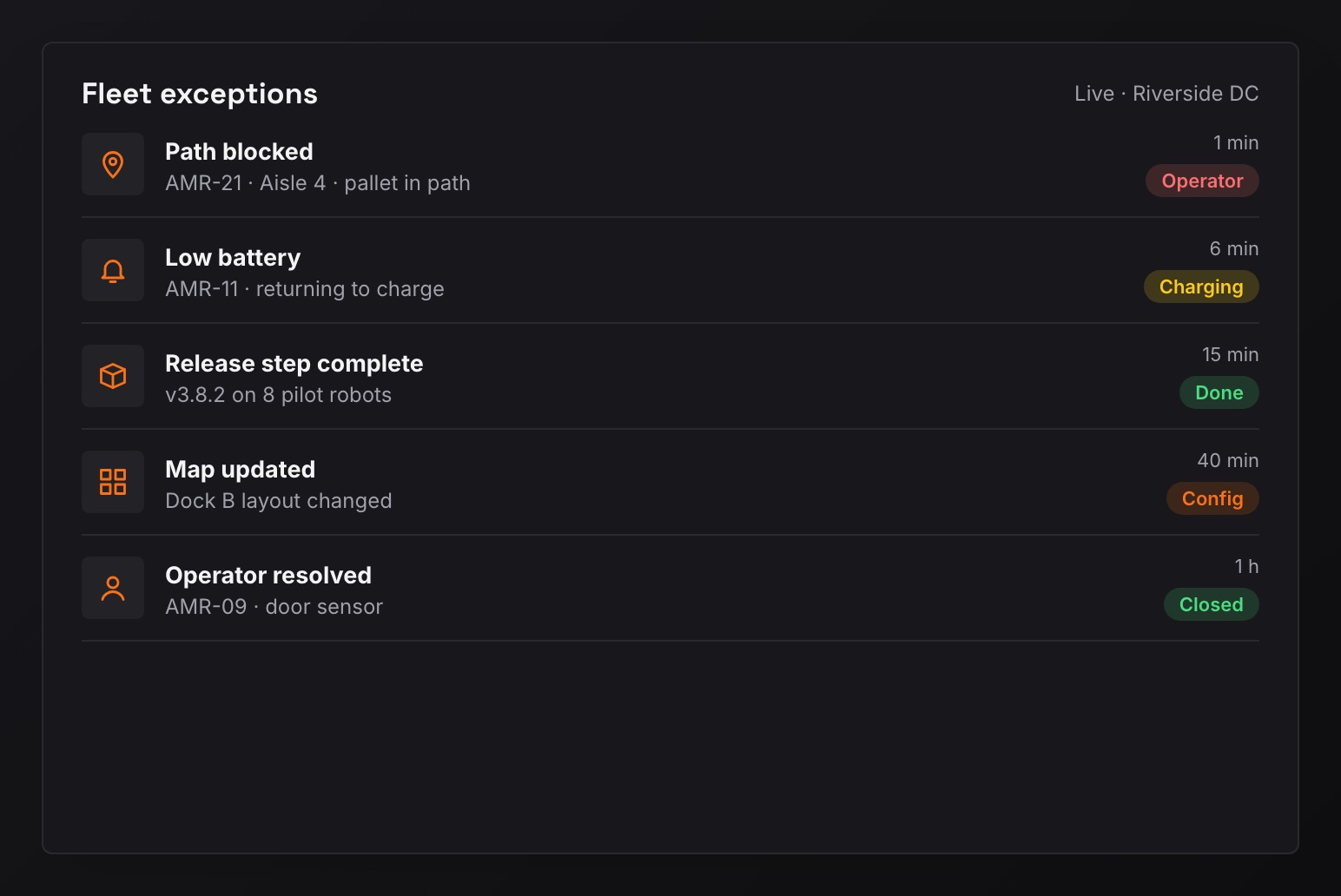
Operators would review task status, robot health and event history together. Exception context would support investigation and help teams follow a defined response procedure.
4
Value Delivered
Kinforge connects engineering data with deployment review and fleet visibility for robot teams:
- Engineers could follow behaviors and configuration.
- Site records would connect maps, zones and task definitions with simulation context.
- Release records would keep versions, test results and approval status together.
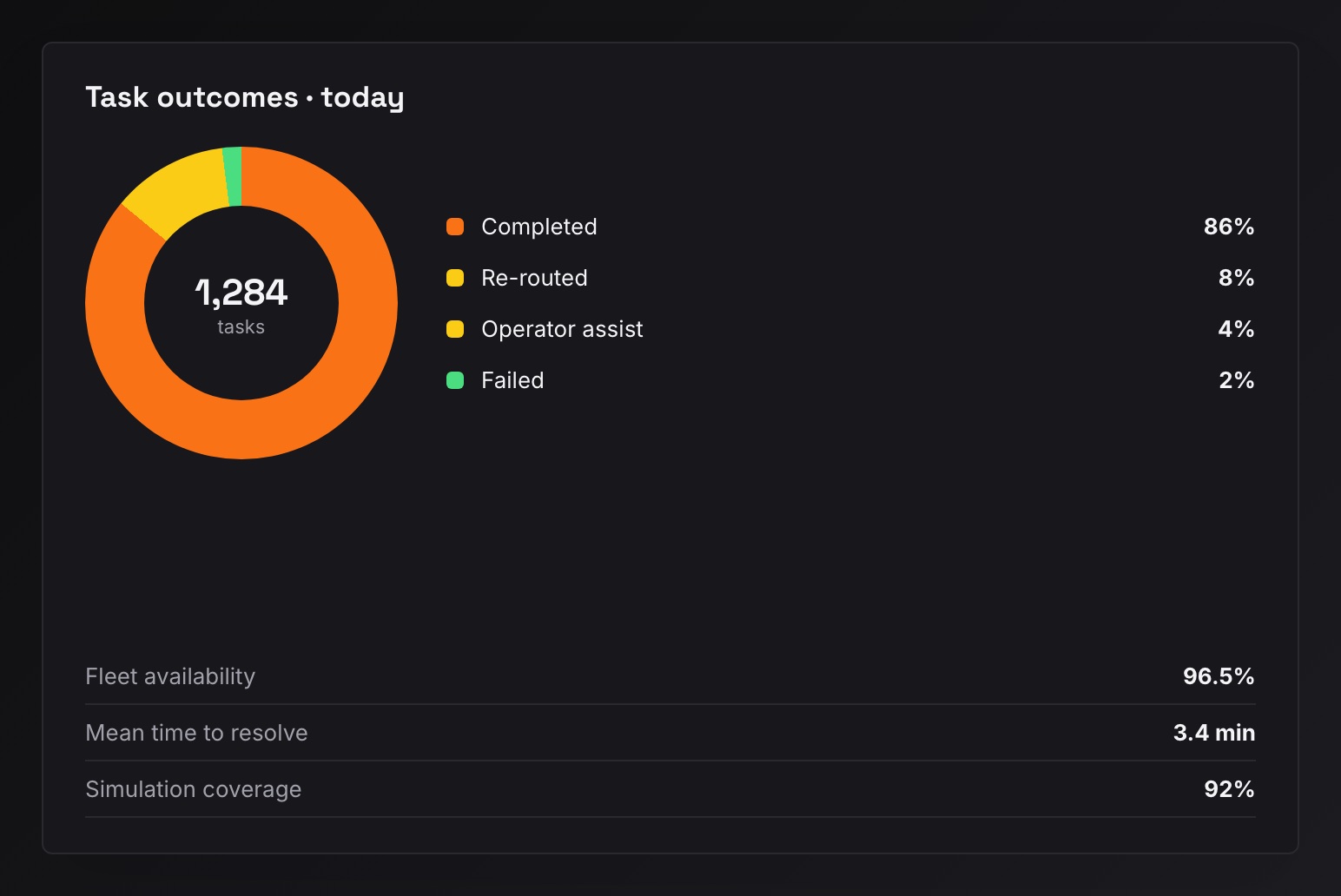
- Context: Fleet views would connect robot health, mission state and event history for investigation.
- Control: Role-based rules and key review steps would scope software releases and operator interventions.
- Growth: Reusable behavior and site setups could support more robots and new deployments.
Similar case studies