Connecting Appointments, Patient Records and Daily Practice Tasks
A connected practice experience from the first appointment to the final follow-up.
Schedule a Strategy Call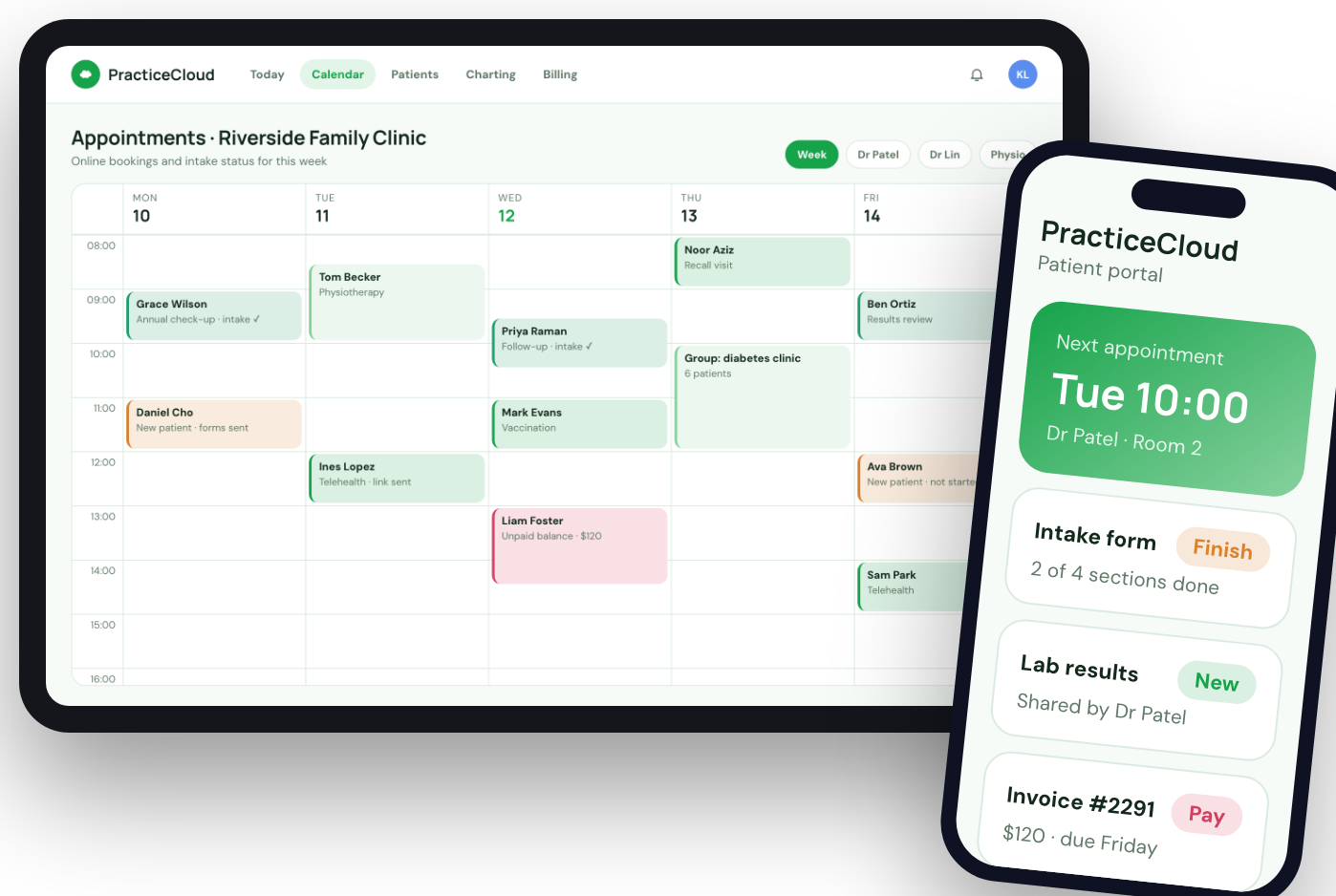
At a Glance
Project name
PracticeCloud
Industry
Healthcare IT
Service offered
Product Design Study & Practice Experience
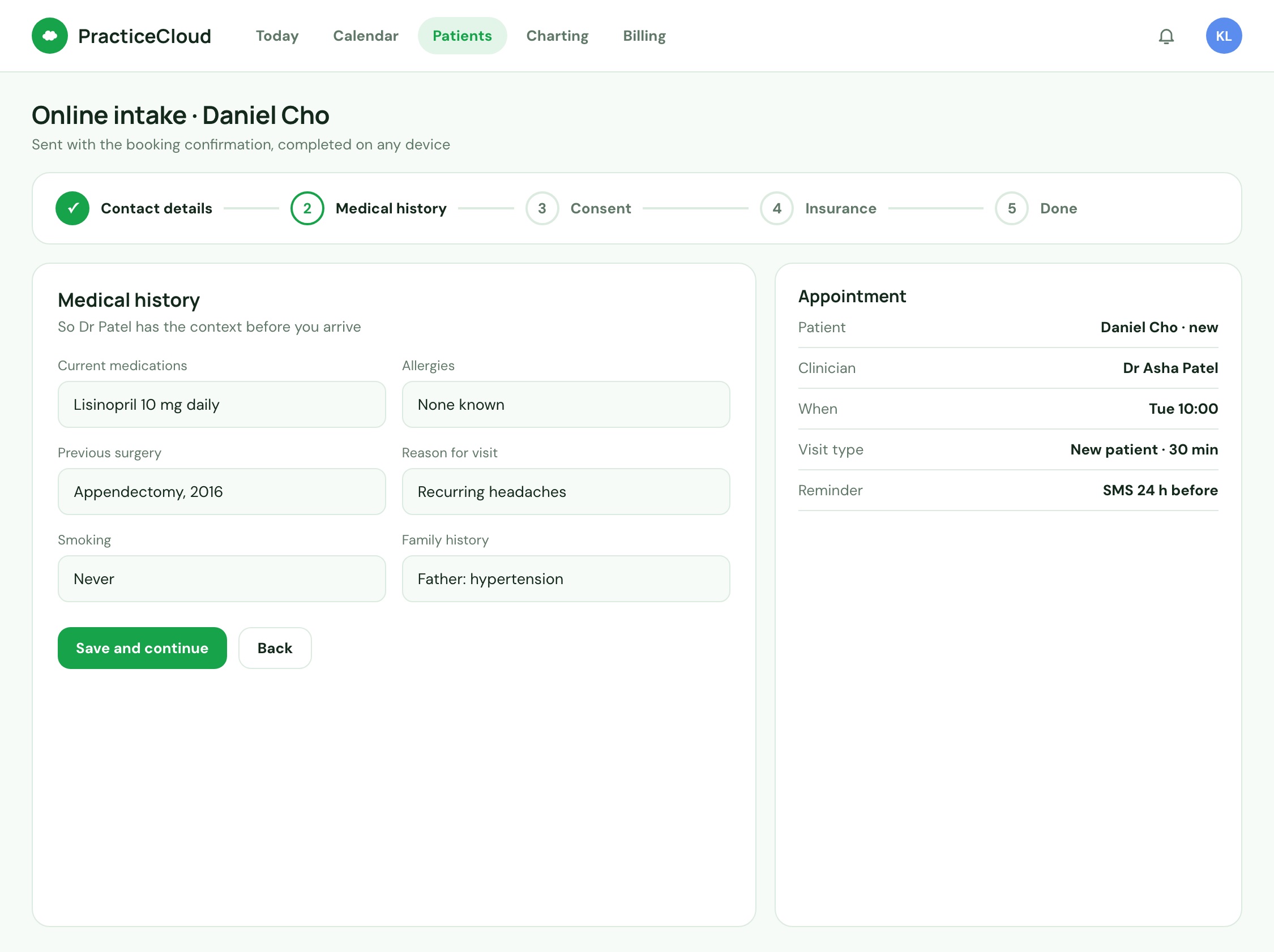
PracticeCloud is a practice management concept for independent clinics. It brings appointment booking, patient intake, charting, and billing into a shared workflow, helping staff follow the care journey without switching between tools.
The proposed experience connects patient-facing forms and appointments with the records teams use each day. Configurable templates, appointment reminders and a patient portal would support the workflow from registration to follow-up.
This concept explores how practice management software could bring scheduling, records, and payments together while keeping a clinician in control.
1
The Challenge
The design brief focuses on four practice challenges: disconnected appointment tools, repeated intake work, inflexible documentation, and billing without shared context.
-
Disconnected Bookings
Separate booking and intake tools can leave staff checking multiple care records to see whether a patient is fully ready for the appointment.
-
Repeat Intake Work
Paper forms and disconnected charts can have patients repeat information and leave staff copying their details into records before the consultation starts.
-
Rigid Documentation
Fixed templates can force each specialty into the same charting process. Clinicians need note structures that support their everyday clinical work.
-
Disconnected Billing Records
When appointment records and payment activity sit apart, teams must reconcile charges, balances, and follow-up tasks manually, with lower visibility of what needs attention.
2
The Approach
The proposed approach starts with the patient journey, then connects tasks around appointments. Staff workspaces would support configurable records, clear status changes, and defined access.
-
1
Map Each Patient Step
Trace the workflow from online booking through intake, consultation and payment, defining what patients and staff need to see and do at each stage of the visit.
-
2
Make Clinical Forms Adaptable
Use configurable intake questionnaires and chart templates to support practice needs. AI-assisted form drafting could provide starting points, with staff reviewing fields before use.
-
3
Tie Patient Records
Link appointments, completed forms, notes and billing data around patient records. Records would follow the workflow, with review points before changes affect clinical notes.
-
4
Plan Privacy Across Each Workflow
Define role permissions, consent handling, retention needs, and access boundaries during discovery, with controls shaped around deployment needs.
3
The Outcome
The intended experience connects four key moments in each clinic visit, from booking and intake to clinical notes and billing.
-
Clearer Booking
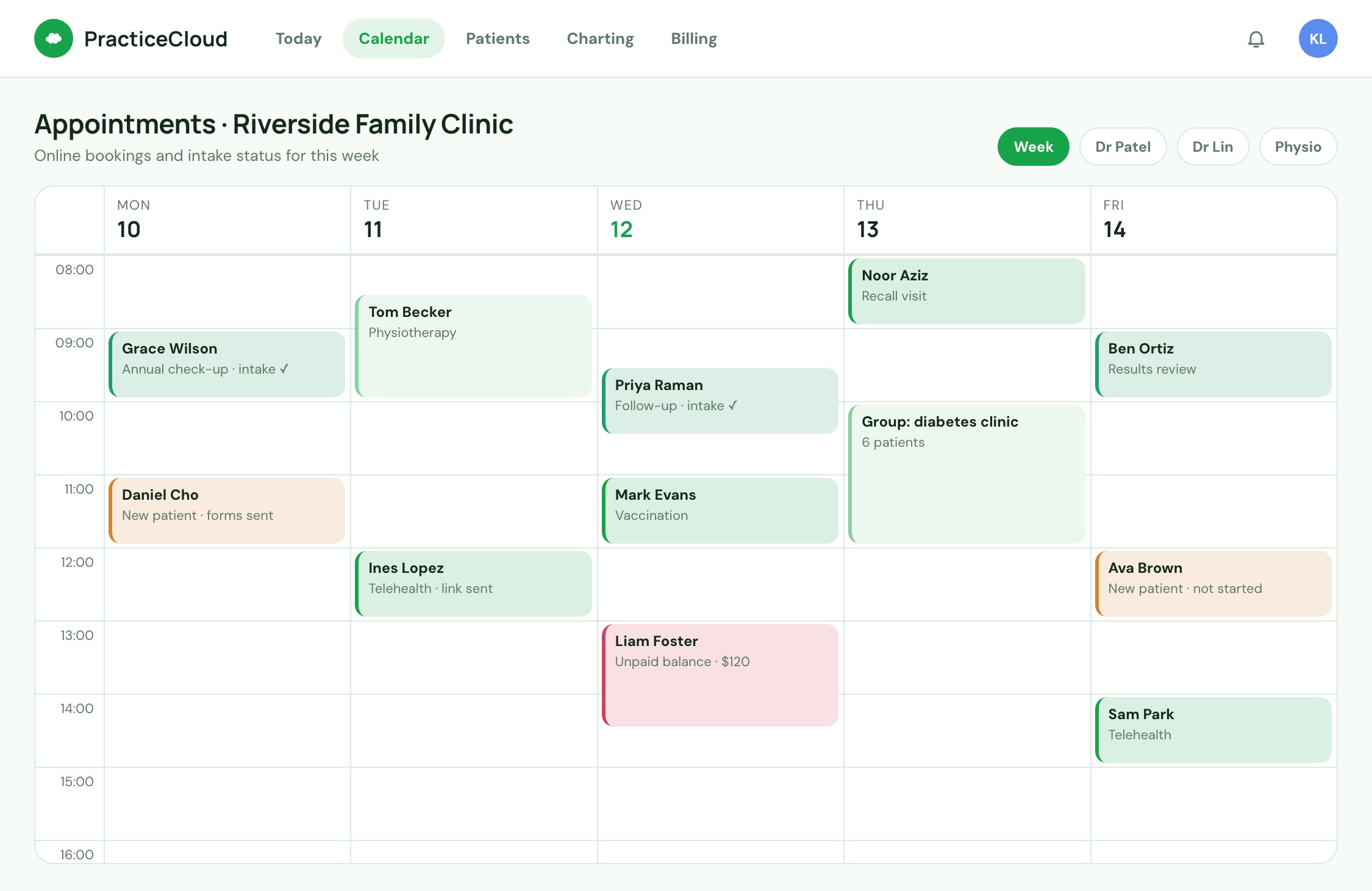
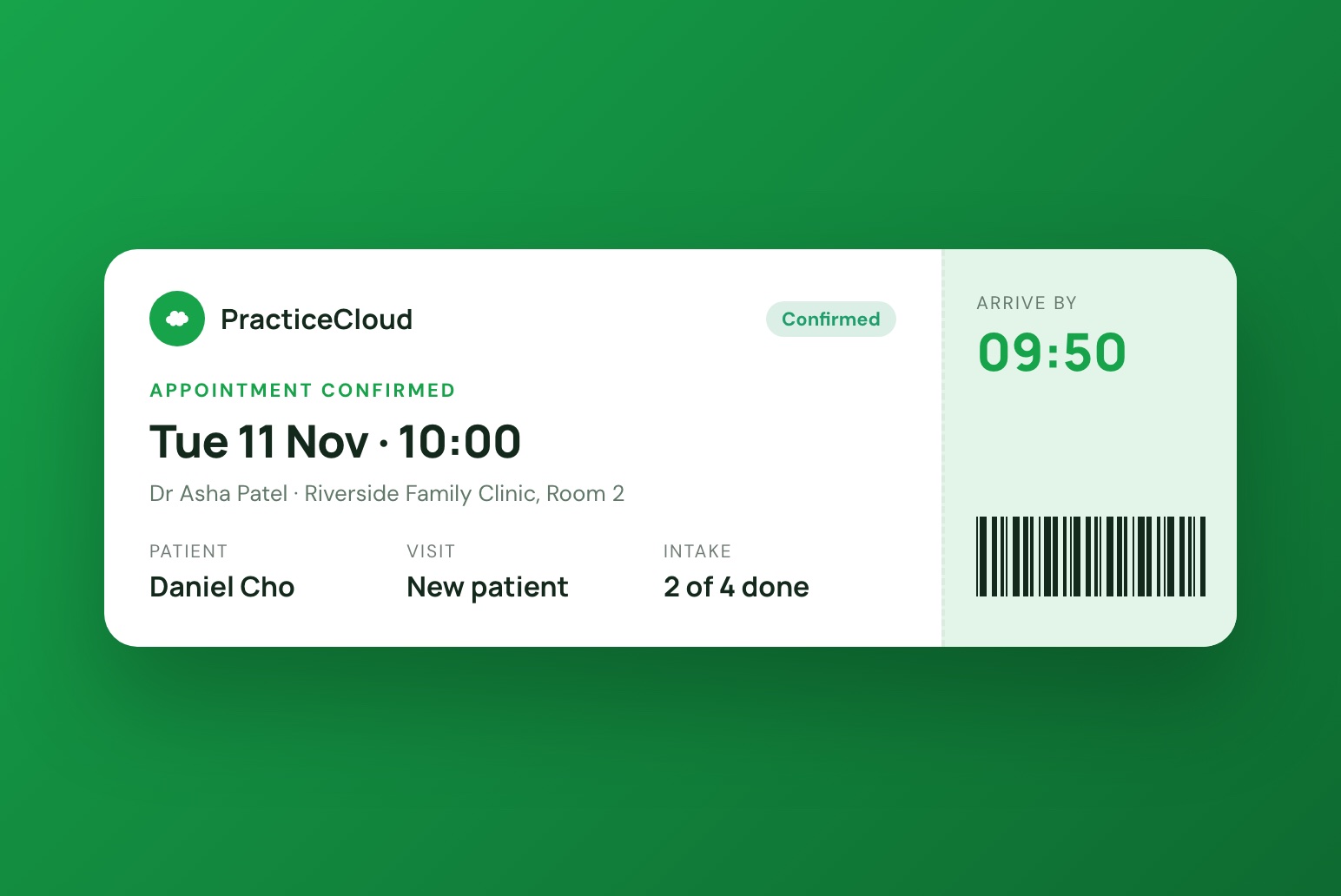
Patients would view appointment options, submit a booking request and receive the next steps. Staff would see booking status and all open intake tasks waiting for completion.
-
Prepared Consults
Completed forms would sit alongside appointment details, giving staff context before a visit. Patients could complete requested documents on a personal device before arrival.
-
Flexible Notes
Configurable chart templates help clinicians structure notes for their specialty. Intake details would support documentation, with clinician review before finalizing records.
-
Billing in One View
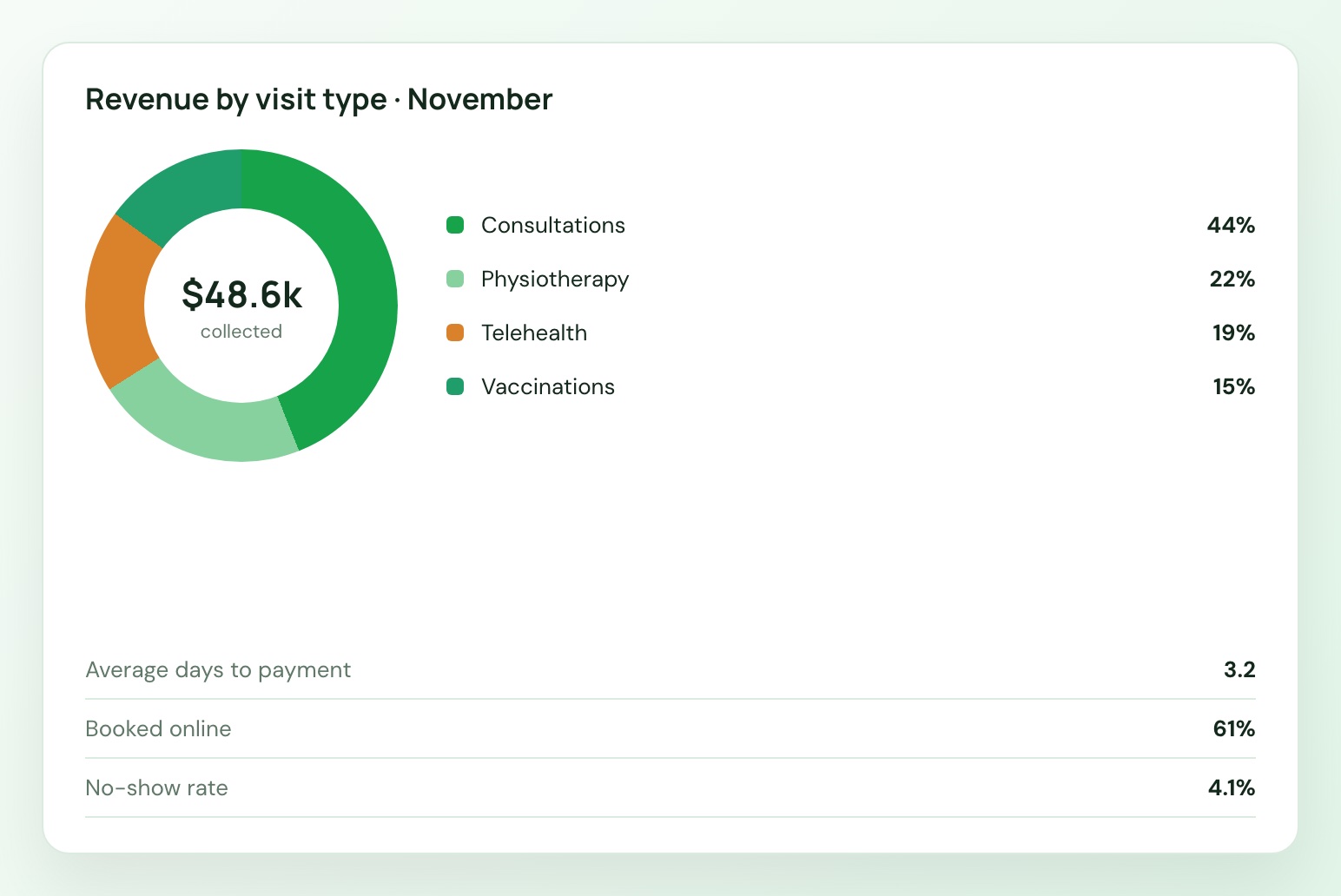
Staff would review charges, balances and payment status with appointment records. Payment integrations would support transactions, with exceptions routed to staff for review.
4
Value Delivered
The concept aims to connect the work of practices while keeping clinical decisions with people:
- A clearer route from appointment booking to intake.
- Clinic staff would have full context for appointments, forms, and patient follow-up.
- Configurable templates would support the documentation needs of clinical teams.
- Traceability: Defined review steps and activity records would help staff follow changes to records.
- Privacy: Role permissions and data handling controls would be planned around patient health information.
- Growth: A modular approach may allow new workflows to be added as practice needs evolve.
Similar case studies