Connecting Flight Schools, Training Records and Daily Operations
Connecting flight training schedules, student records and daily school operations.
Schedule a Strategy Call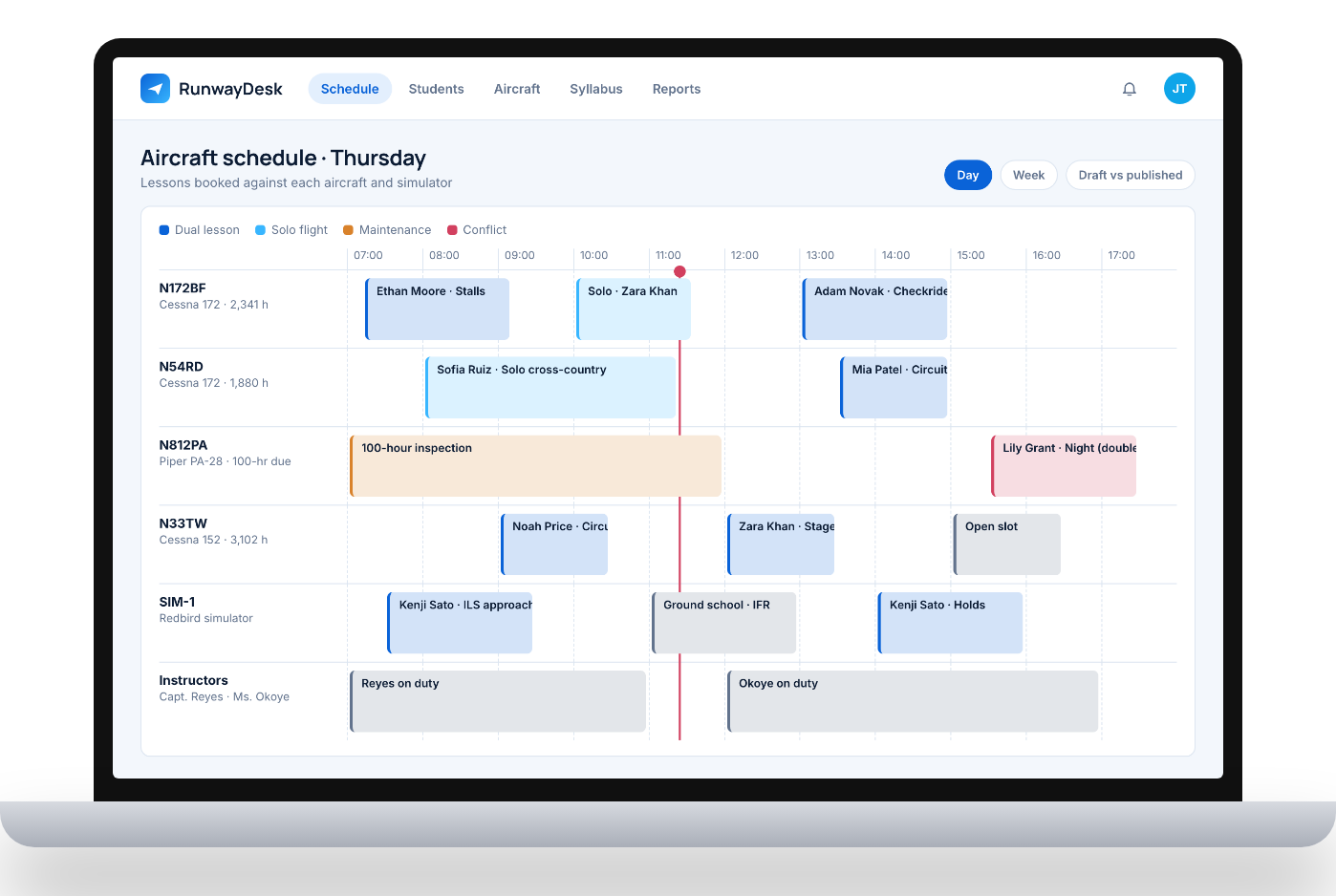
At a Glance
Project name
RunwayDesk
Industry
Aviation Tech
Service offered
Product Design Study & Training Operations
RunwayDesk is a flight school management concept that connects scheduling, student records and aircraft availability. A shared workspace would help training teams coordinate lessons and review progress without combining separate tools.
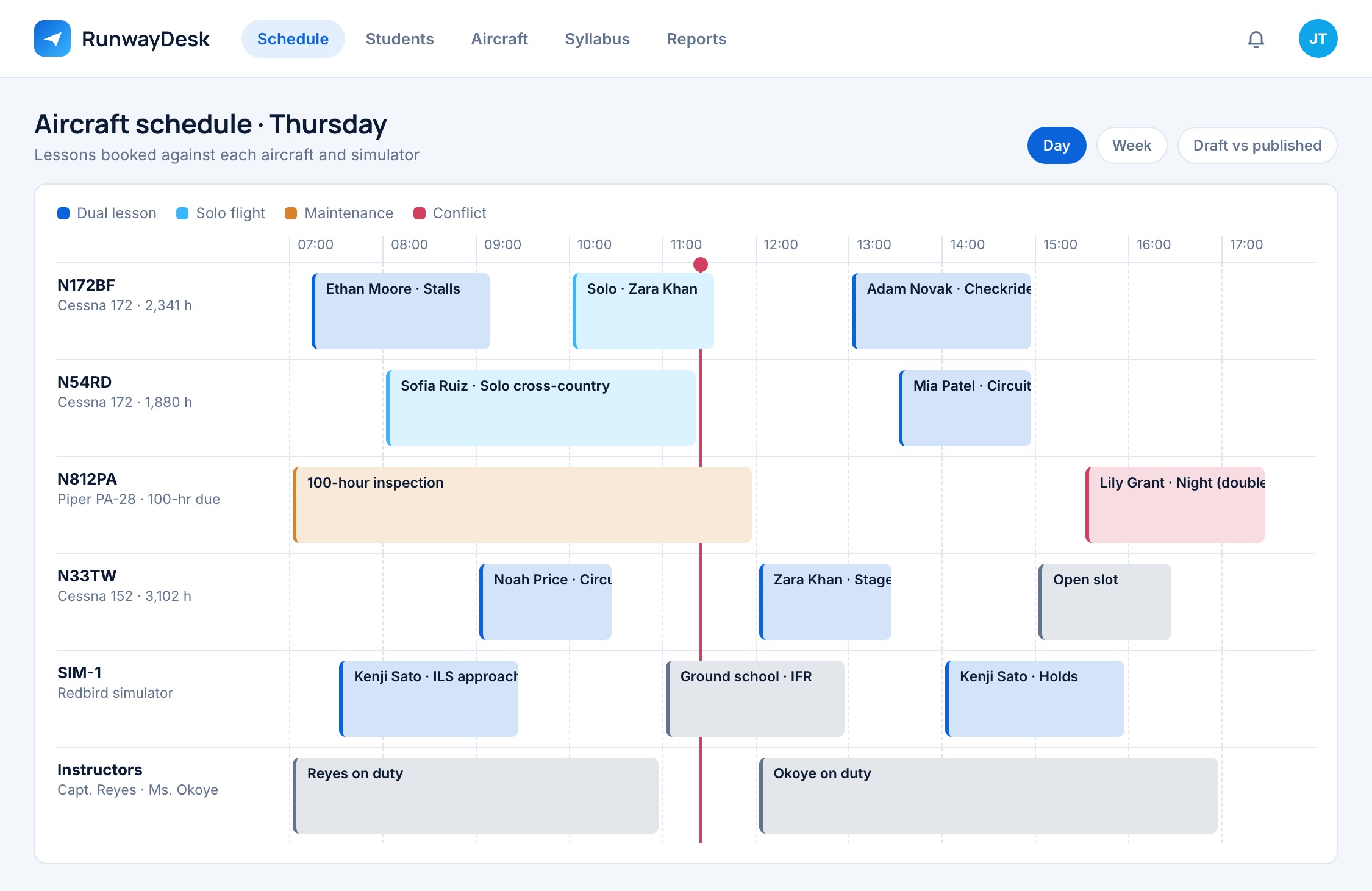
The proposed experience links students, instructors and aircraft with lesson records and school updates. Training managers would review progress against the syllabus, while schedulers could compare draft schedules before publication.
This concept explores how flight training software could connect planning, lesson records and operational context, with school managers in control.
1
The Challenge
This design brief focuses on four flight-school challenges: separate scheduling tools, fragmented training records, less fleet context, and manual operational reporting.
-
Disconnected Planning
Separate calendars for students, instructors, and aircraft can leave schedulers checking other tools before they can confirm a training slot.
-
Fragmented Records
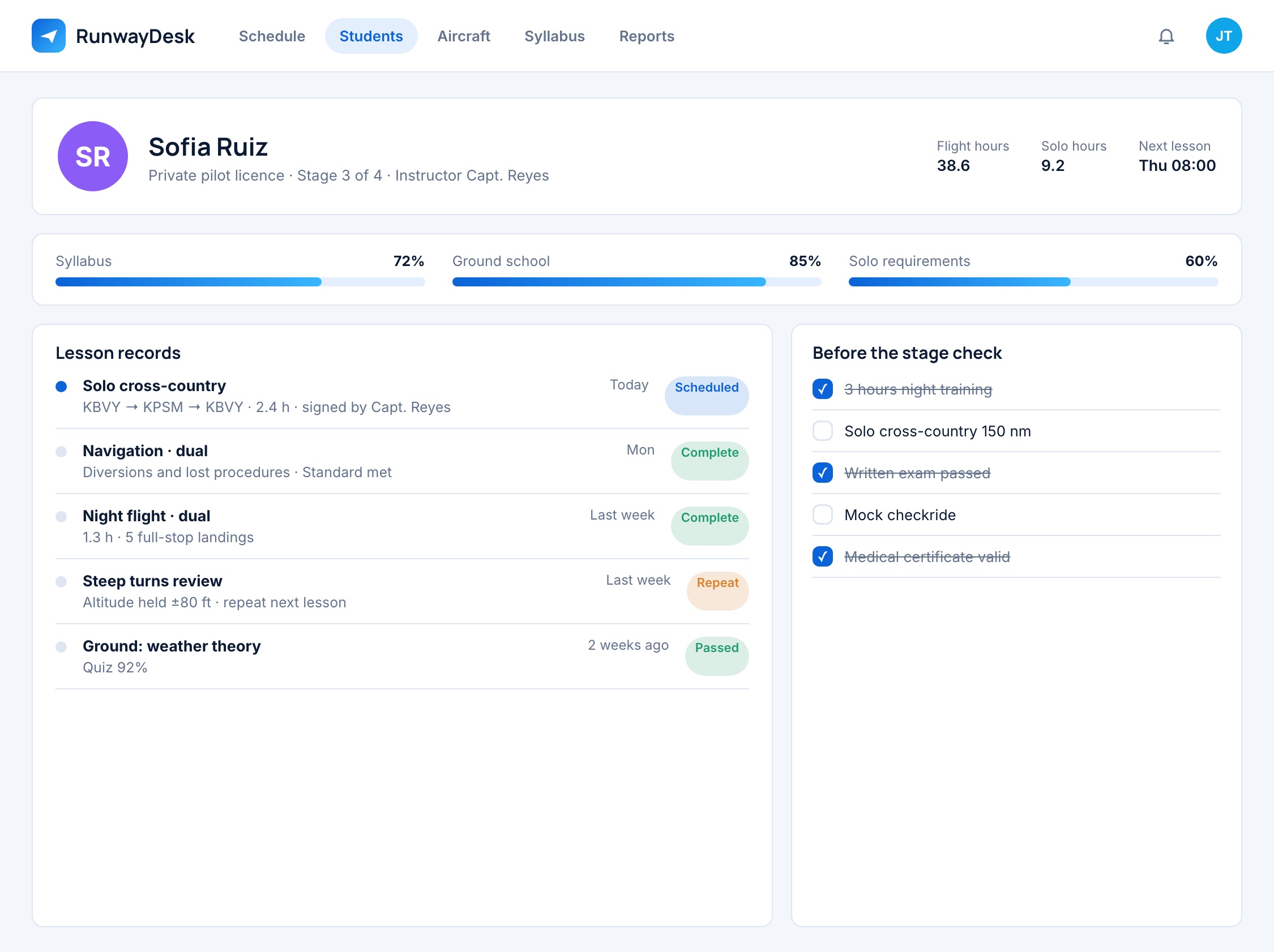
Lesson results, instructor comments, and completed hours can sit in separate files. Training managers need a view of progress against the student syllabus.
-
Fleet Status Issues
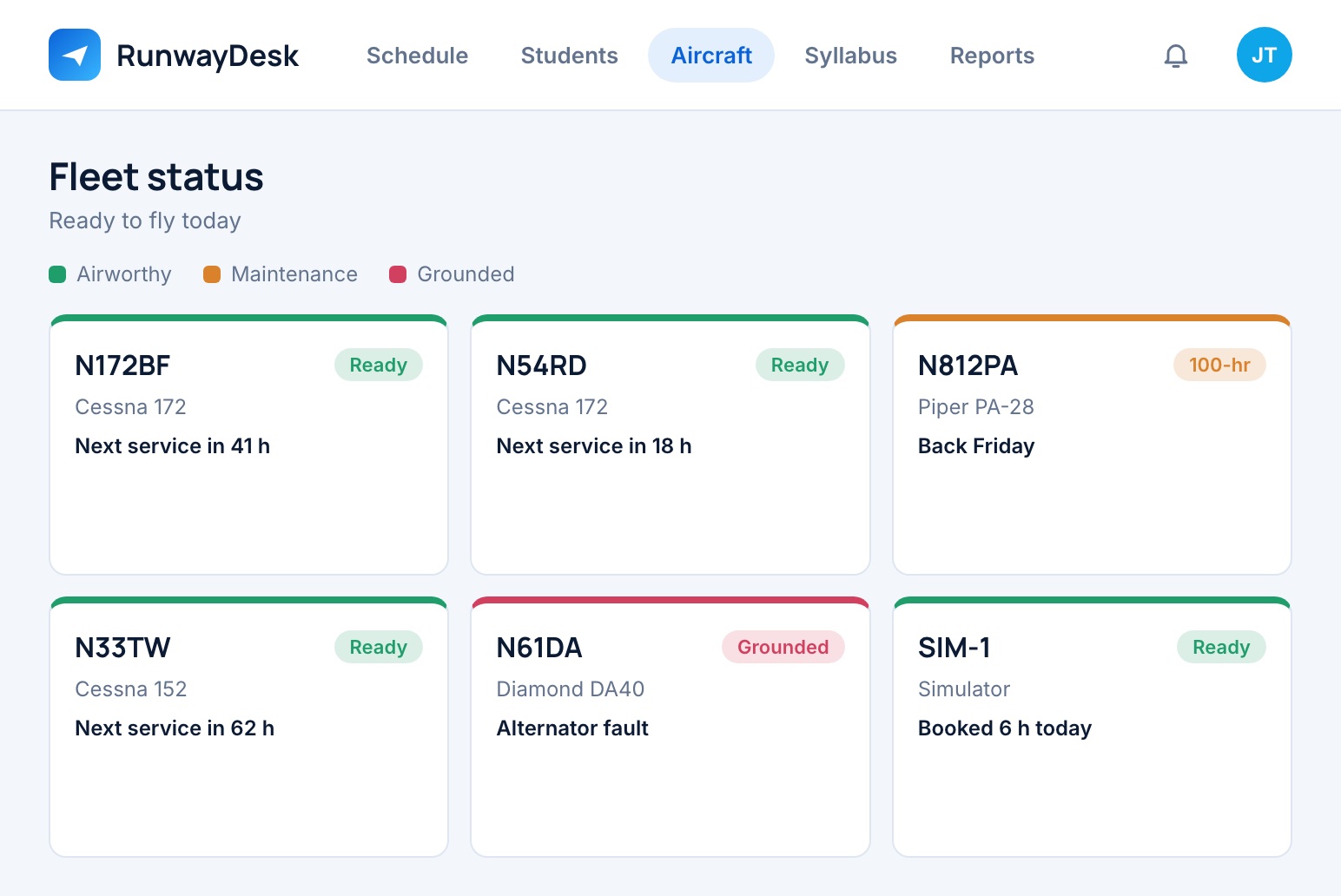
When fleet availability is disconnected from maintenance updates, planners must chase status changes to know the resources can support each lesson.
-
Reports Across Separate Tools
Compiling training activity and resource use across separate records can turn routine reporting into manual reconciliation, leaving managers with scant context for planning.
2
The Approach
The proposed approach connects lesson planning with the records from training. Role-specific workspaces would bring scheduling, student progress and fleet context into one reviewed workflow.
-
1
Map Each Lesson Cycle
Trace the workflow from student enrollment through lesson planning, instructor assessment, and progress review, defining the records and handoffs at each stage.
-
2
Connect Scheduling Resources
Bring student readiness, instructor availability and aircraft status into one planning view. Draft scheduling suggestions stay unpublished until a scheduler reviews and accepts them.
-
3
Link Lesson Records
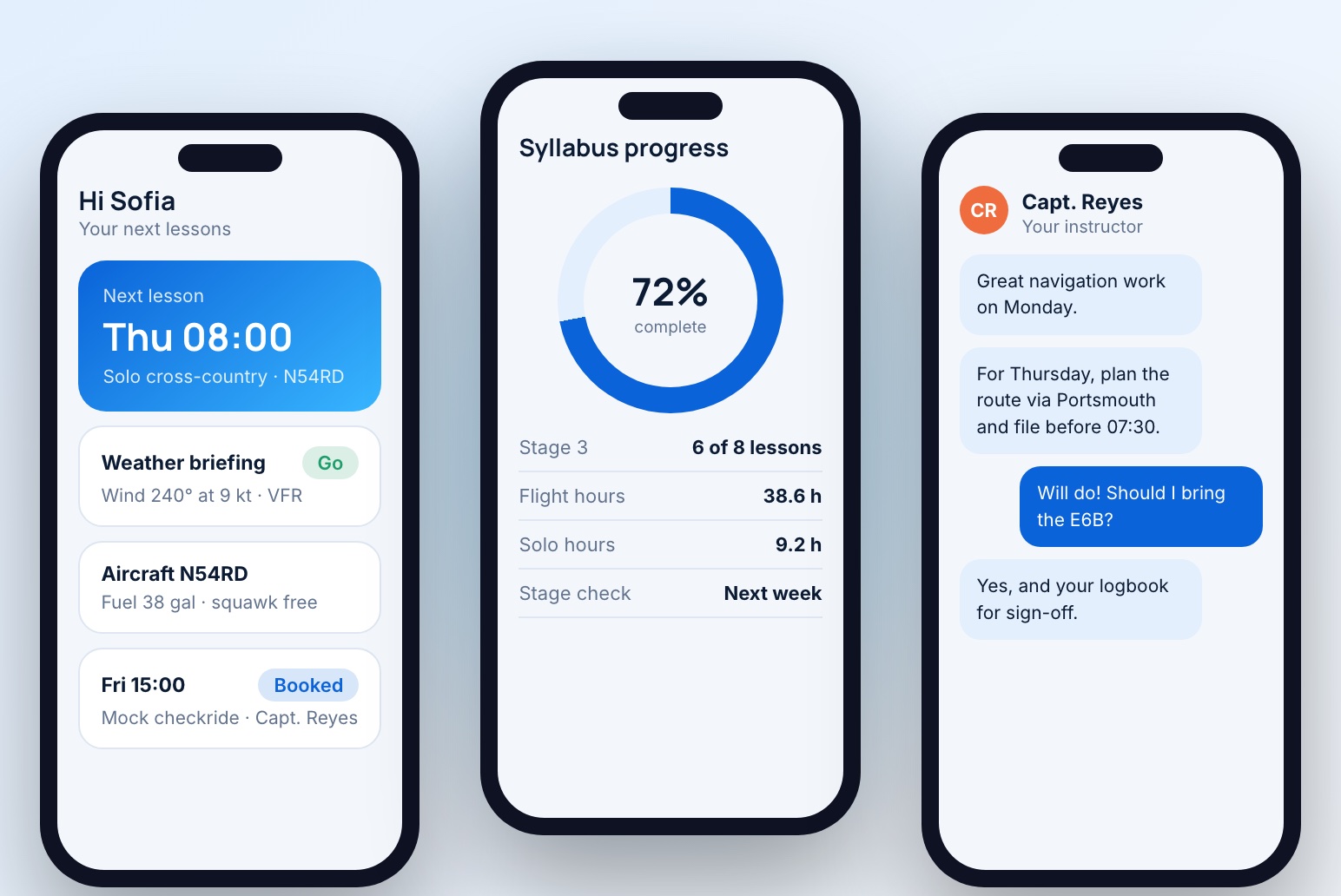
Connect completed lessons, logged hours, and instructor feedback to the syllabus. Training managers would review needs and repeated lessons using consistent progress records.
-
4
Plan Operational Access Controls
Define permissions, record history, and review responsibilities with staff, with operational limits and deployment needs scoped during discovery.
3
The Outcome
The intended experience connects four school workflows, from planning lessons to checking training progress and site activity.
-
Plans in Review
Schedulers would view students, instructors, and aircraft in one view. Draft bookings could be adjusted before release, with conflicts and resource limits visible for review.
-
Consistent Reviews
Instructors would record lesson results against the syllabus. Training managers could review completed work, upcoming lessons, and gaps using shared records instead of files.
-
Fleet in Focus
Aircraft availability would link to maintenance updates and operational status. Teams would use records to coordinate bookings, with school staff retaining release decisions.
-
Reporting in Context
Managers would review training activity, resource use and records through dashboards. Source records remain linked so staff can investigate gaps before using reports to plan.
4
Value Delivered
The concept aims to link flight-training tasks while keeping operational decisions with people:
- Schedulers could review bookings in a unified view.
- Training teams would have shared context for lesson results and student progression.
- Linked fleet updates would support planning around known aircraft availability.
- Traceability: Linked lesson records and review histories would help staff follow training progress.
- Access: Defined permissions and record controls would be scoped around school roles and operating rules.
- Growth: Modular workflows could extend across a fleet, training programs, and locations.
Similar case studies