

Imagine this: someone lands on your website, skims a few pages, and then leaves without acting. It might feel like watching people pass by your shop window but never walk in. What if you could catch their attention at the right moment and turn them into customers? That’s the power of garage2global.
In this guide, we’ll walk through exactly how to use garage2global to convert website visitors into leads and customers. We’ll keep it simple, practical, and friendly, no jargon without explanation, just steps you can follow.
Table of Contents
Why Conversion Matters More Than Just Traffic
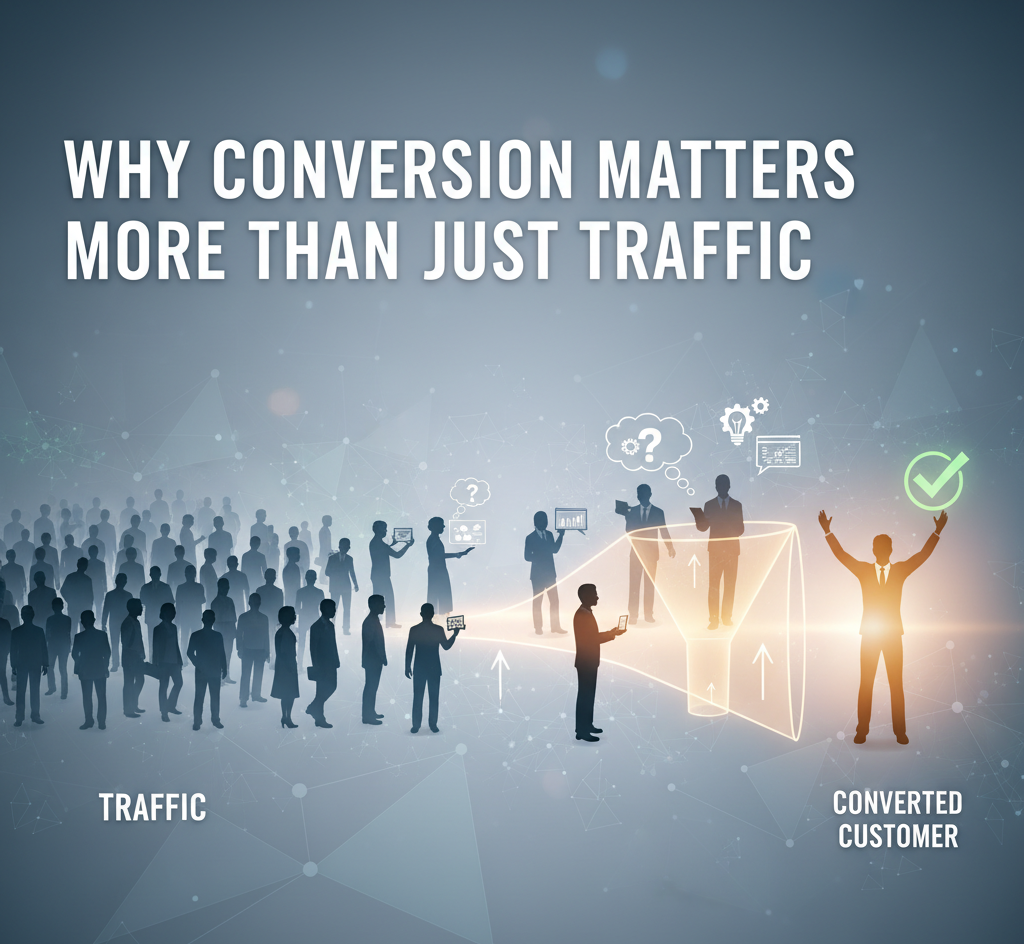
Getting visitors is essential, but conversions are what bring revenue. Here’s why focusing on conversion is smart:
- Many websites see average conversion rates of 2–3% for eCommerce or lead generation. That means 97–98 out of 100 visitors leave without acting.
- Cart abandonment rates are high: around 68–75% in many studies. (Source: Baymard Institute)
- A small increase in conversion (say, 0.5%) can double profits if your traffic is decent.
- Mobile traffic often constitutes over half of total visits; if your site is hard to use on phones, you’re losing many chances.
So instead of just chasing more traffic, improving conversion gives more ‘bang for buck.’ That’s where a tool like garage2global can help.
Key Terms & NLP Keywords to Know
Before we dig into steps, here are some terms (and keywords) that matter:
| Term | Meaning | Related Keywords (LSI / NLP) |
| Conversion Rate Optimization | The practice of improving your site so more visitors take desired actions | CRO, A/B testing, conversion improvement |
| A/B Testing | Running two versions of a page to see which performs better | split testing, multivariate testing |
| Heatmap / Click Map | A visual map showing where users click or hover | scroll map, session replay |
| Lead Capture | Mechanism to collect visitor contact info | email opt-in, lead form |
| Cart Abandonment | When a visitor adds something to cart but exits before purchase | checkout drop-off, abandoned cart recovery |
We’ll use these naturally. Also, we sprinkle in long-tail phrases like “how to convert website visitors with garage2global” and “garage2global setup for eCommerce” so search engines see we’re relevant.
What Is garage2global and How It Helps

garage2global is a conversion platform that bundles tools you usually need separately:
- Visitor tracking and behavior insights
- Pop-ups and CTAs triggered by user actions
- Lead capture forms and flows
- Integration with email/CRM tools
- A/B testing and optimization
You add a small script or plugin to your site, define conversion goals (like newsletter signup or purchase), and let garage2global run triggers and workflows. It gives you insight into where visitors drop off and ways to nudge them back.
It fits well for SaaS sites, eCommerce shops, lead-based services, and more. If you are a web agency or building user-driven sites, it can make your conversion work smoother and faster.
Step-by-Step: Using garage2global to Convert Visitors
Let’s go through a practical setup. Treat this as your baseline playbook.
Step 1: Sign Up and Add Tracking
- Create your garage2global account.
- Insert the tracking script into your site’s header (or use plugin if on WordPress / Shopify).
- Wait 24 hours and check if visitor data starts appearing.
Tip: After installation, visit multiple pages yourself, to see if your actions show up in the analytics.
Step 2: Define Conversion Goals
Decide what action you want people to take.
- For a blog site: email newsletter signups
- For a SaaS site: free trial or demo request
- For eCommerce: checkout or add to cart
Give each goal a meaningful name, like “Blog Signup” or “Purchase Complete.” This helps later when you read reports.
Step 3: Add Behavior Triggers
Next, tell garage2global when to show prompts.
- Exit-intent pop-ups: when the cursor goes toward the tab close or back button
- Timed pop-ups: after a user spends X seconds on a page
- Scroll triggers: when a user scrolls past a certain point
Test using light offers (discounts, content offers) or subscription prompts.
Step 4: Create Email / Follow-Up Flows
Once a visitor gives you their email, you want to follow up, not ignore them.
- Connect to your email tool (Mailchimp, ActiveCampaign, etc.).
- Make a short welcome sequence:
- Email 1: thanks + deliver something (e.g., eBook, discount)
- Email 2: helpful content or product highlight
- Email 3 (optional): promotional offer
- Email 1: thanks + deliver something (e.g., eBook, discount)
Try to match the email to what they visited. If they viewed a product, highlight that product.
Step 5: Run A/B Tests
Don’t guess blindly. Always test.
- Pick one element to test: headline, button text, image.
- Create a variation (version B) and run both A and B.
- Let test run until result is statistically significant (enough visits).
- Record which variant wins and why.
Step 6: Use Heatmaps and Session Replays
This gives you “eyes on screen” of visitor behavior.
- Deploy heatmaps on your key landing pages.
- Review where people click, and where they don’t.
- Watch session replays to see hesitation, misclicks, or confusion.
- Adjust layout or calls to action based on observations.
Step 7: Measure, Review, and Iterate
Every week or two:
- Look at conversion rate per page
- Review list growth and how many convert from emails
- Note which A/B tests succeeded
- See where visitors drop off (especially checkout)
- Try a new experiment
Small changes repeated over time compound into strong gains.
Example Stories
Let me share a couple of simplified examples (fictional but realistic):
- A small online shop noticed 60% cart abandonment. They added a pop-up when someone tried to leave the checkout page offering free shipping above a threshold. The abandonment dropped 8 points in a month.
- A SaaS landing page had weak conversions. They tested two headlines: one broad, one specific. The specific one (stating price and promise) gave 25% higher trial signups.
These show that small adjustments, aligned with behavior data, often move the needle.
What to Avoid: Common Mistakes
When using conversion tools, many go wrong in the same ways:
- Ignoring mobile users — pop-ups might overlap content or be unclickable.
- Using vague CTAs — “Click here” often underperforms vs “Get my free checklist.”
- No follow-up — collecting an email and not emailing is wasted opportunity.
- Overloading pop-ups — many pop-ups in one session frustrate users.
- Running multiple tests at once — you won’t know which change drove results.
By steering clear of these, we save time and energy for what truly helps.
Target Metrics Table
Here’s a table with baseline metrics and what to aim for in your first 30–60 days:
| Metric | Why it matters | Initial target / goal |
| Conversion rate (by page) | Core measure | #ERROR! |
| Email capture rate | How many visitors join your list | 1–3% on content pages; higher on lead pages |
| Cart abandonment | Checkout friction marker | Lower by 5–10% |
| Mobile bounce rate | Mobile usability measure | Reduce by 5 points |
| A/B test wins | Proof of improvement | 1–2 wins per month |
These help direct your focus to what matters instead of chasing random changes.
Filling the Content Gaps
We checked competing blogs and found gaps:
- Many talk about concepts but don’t give a setup checklist.
- Some explain tools but don’t show how to pick tests or measure progress.
- Very few provide easy beginner steps for small teams without huge budgets.
We addressed these by giving you a checklist, key metrics, simple steps, and examples you can follow immediately.
Integrations & Technical Notes
garage2global supports links to many email platforms and CRMs. You can map custom fields so your lead data flows automatically. No manual CSV exports. This saves time and reduces error.
Also, watch page speed: even a small tracking script can slow pages. Use asynchronous loading and test speed after install with tools like Google PageSpeed Insights.
Final Thoughts
Converting visitors into customers is a mix of art and science. Tools like garage2global give you what you need in one place. But tools alone don’t change things measurement, testing, and iteration do. Get in touch with Webologists.
If you:
- Install tracking and set clear goals
- Use well-timed pop-ups or CTAs
- Email and nurture captured leads
- Test variations
- Measure and repeat
…you’ll see steady gains in conversions and growth.
-
Is garage2global good for small businesses or startups?

Yes. You don’t need huge budgets. It provides essential conversion tools in one place, making it ideal for growing teams.
-
Will it help increase organic traffic?
Not directly. garage2global is about conversion. To increase organic traffic, use SEO, blogging, backlinks, and social media. But conversion tools help you make more from the existing traffic.
-
Can it assist with eCommerce stores?
Yes. It helps with cart abandonment, promotional pop-ups, product suggestions, and email recovery flows.
-
Which email or CRM platforms work with it?
Common ones like Mailchimp, ActiveCampaign, and popular CRMs are often supported via direct integration or via API.
-
Is it difficult for non-technical people?
Not overly. Basic setup can be done with minimal tech skills. Many tasks are point-and-click. But for advanced customization, some help may help.