
Table of Contents
Overview
Why compare these two? Many founders ask: Which partner moves faster? Which one fits a small, funded team best? We wrote this to answer those exact questions in plain language.
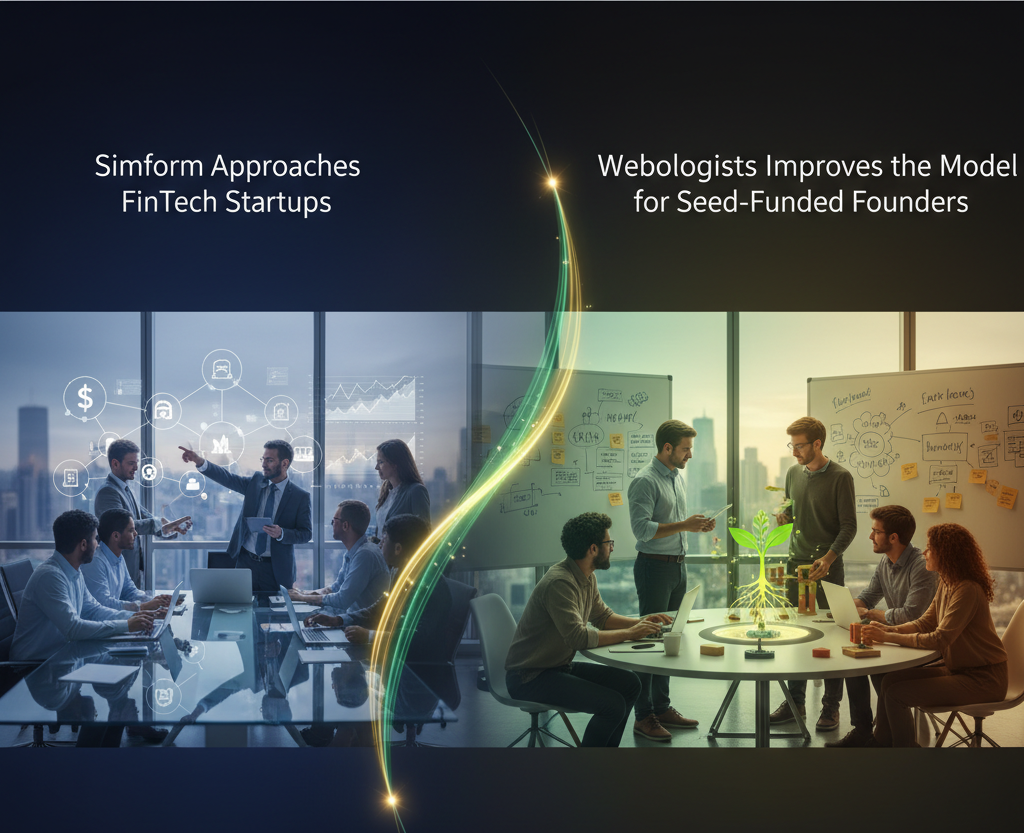
Below we explain how Simform typically works with FinTech firms, where gaps appear for seed-stage teams, and how we at Webologists change the model to match the needs of small funded startups.
What Simform does
Simform focuses on product engineering and large-scale app work. They often help fintech companies modernize systems, add automation, and scale infrastructure. For example, Simform’s case studies includes modernizing a lending platform and reducing loan processing by 35% while supporting large loan volumes.
Key patterns in Simform’s approach:
- They use agile teams and product engineering methods to build robust platforms.
- They add CI/CD and cloud migration to speed releases and stability.
- They work across fintech domains (payments, lending, pensions), using standard fintech practices like secure data handling and audit trails.
So, what does that mean for a seed-funded founder? Simform is strong when you need engineering depth and system hardening. But small teams often need speed, investor-ready demos, and a tighter budget window.
Where seed startups feel gaps
Ask yourself: Do we need a hardened production system or a compact demo that proves market demand? Many seed teams need the latter. Common gaps we see when big engineering shops work with small startups:
- Time to first demo. Average MVPs take about 3–4 months; founders often want a faster investor demo.
- Cost fit. Enterprise workflows can add scope and cost that seed rounds may not cover.
- Go-to-market help. Seed teams want help testing business assumptions, not only code.
These are practical limits not faults but they point to a chance to offer a different service model for seeded founders.
How Webologists improves the model
So how do we at Webologists adjust the model? We focus on making a small team’s funding go farther and faster. Below we list the main shifts we make when working with seed-funded fintech founders.
- Faster MVP path. We plan for a focused investor demo in 8–12 weeks, splitting work into must-have features and future upgrades. This matches many founders’ need to show traction quickly.
- Stage-right scoping. We limit initial scope to features that prove value: user flows, simple payments or KYC proof points, and dashboard metrics that investors ask about.
- Compliance basics early. For fintech, we set up basic KYC/AML patterns and secure data storage so demos can show a realistic path to production.
- Clear pricing bands. We offer fixed short sprints and an extension plan so a seed round can map to concrete deliverables.
- Go-to-market help. We add lightweight user tests, landing pages, and funnel tracking so founders can show early traction to investors.
These choices help founders take seed funding and turn it into a testable product quickly — while leaving room to scale later with deeper engineering partners if needed.
View
| Area | Simform (typical) | Webologists (seed-focused) |
| Typical project size | Mid → large enterprise | Small → seed startup |
| Time to MVP/demo | 3–6+ months | 8–12 weeks target. |
| Main strength | Robust platform engineering, migrations. | Fast investor demo + stage-right scoping |
| Compliance | Deep, enterprise-grade setup | Core compliance flows for demo (KYC/secure storage) |
| Go-to-market help | Focus on product delivery | Adds landing pages, funnels, user tests |
| Pricing model | Team extension / custom | Sprint packages + clear deliverables |
Evidence & context
- Fintech funding and market trends show cycles but steady investor interest in focused fintech products. Recent sector reports highlight selective but active fintech deals. These reports help founders time product and fundraising plans.
- Industry guides on MVP timelines show a common target of 3–4 months for many teams. For seed founders, aiming for an investor demo in ~8–12 weeks is realistic with tight scoping.
Practical checklist for founders
Thinking of who to hire after seed funding? Ask this short list before you pick an agency:
- Can they deliver an investor demo in your target weeks?
- Will they scope to show value without building everything?
- Do they add minimal compliance so demos are credible to partners or early users?
- Do they help with simple go-to-market steps so you can show users and traction?
If you want, we can walk through a 30-minute plan for a seed-stage fintech MVP and map features to weeks and budget.
Get in touch with Webologists.
-
How long will my fintech MVP take?

Typically 8–12 weeks for a focused investor demo; full MVP often sits at 3–4 months.
-
Do seed startups need full compliance from day one?
No. Start with core compliance flows (KYC proof, secure data patterns). Full enterprise compliance can come later.
-
Can Simform do quick MVPs?
Yes, but their strength lies in larger engineering scopes and modernizing systems. They can shift to faster builds if the scope is tailored.
-
What should be in a seed-stage scope?
Core user flow, basic payment/KYC, analytics, and an investor dashboard.
-
How do we show traction to investors fast?
Run simple landing pages, early user tests, and funnels to collect signups and engagement data.