Connecting Shipping Labels With Tracking and Every Return Journey
Connecting shipping rates, label preparation, tracking updates and return records.
Schedule a Strategy Call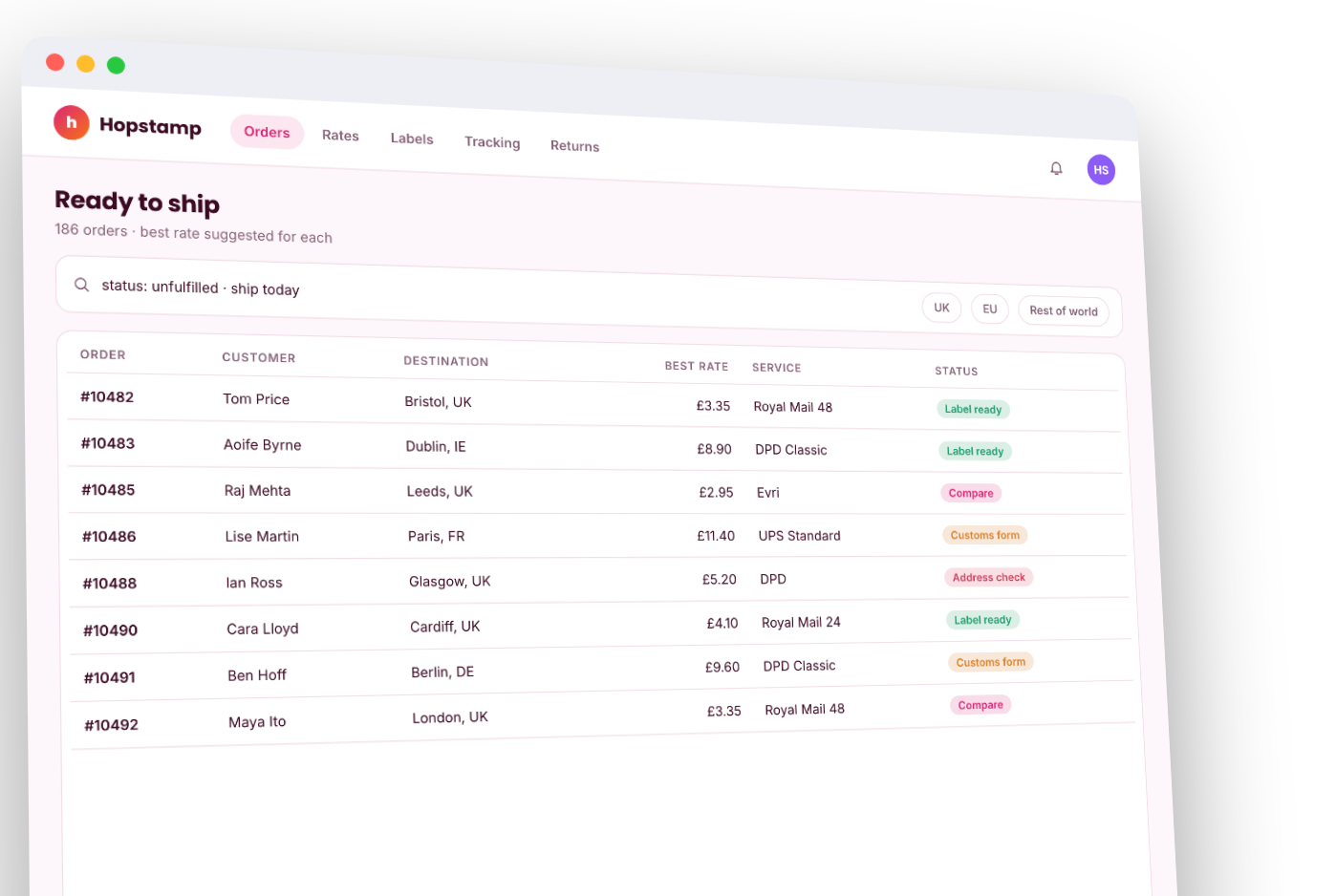
At a Glance
Project name
Hopstamp
Industry
Shipping SaaS
Service offered
Product Design Study & Workflow UX Mapping
Hopstamp is a shipping management concept for merchants and fulfillment teams. It connects carrier service options, package details, labels, tracking events and return records so staff can review a shipment without opening extra tools.
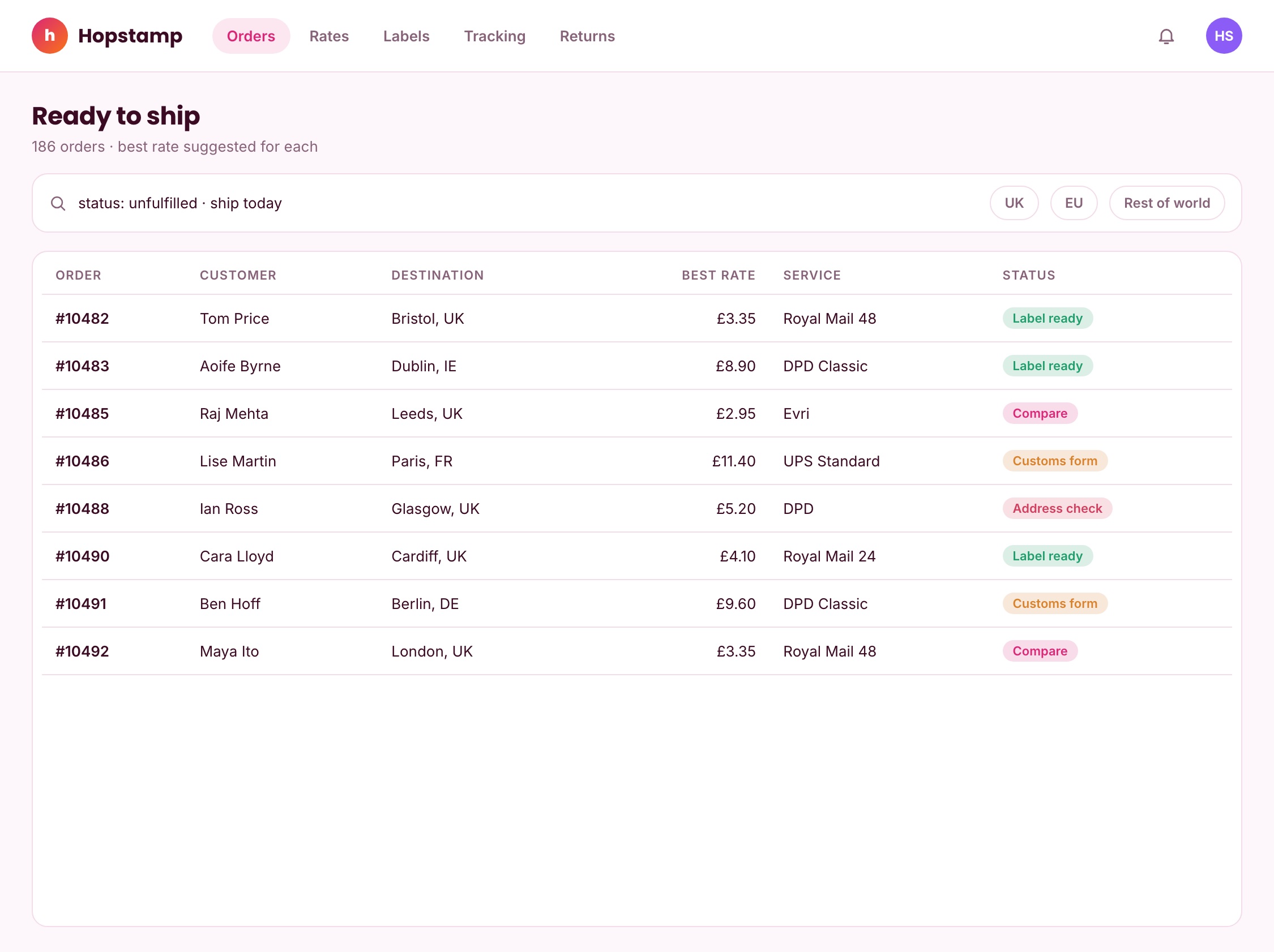
The proposed workspace keeps every shipping decision with its order. Teams would compare services on offer, review package and address details, prepare labels and follow tracking updates, with return records linked to their shipment.
The concept explores how shipping software may track order and package context from carrier selection through delivery updates and return handling.
1
The Challenge
The brief addresses four shipping gaps: carrier choices in separate tools, repeated label setup, tracking events without order context and returns unlinked to shipments.
-
Scattered Rate Checks
Carrier options can sit in separate tools. Teams need comparable service details, package inputs and quoted prices before choosing a service.
-
Repeated Label Work
Reentering addresses and package details creates another setup step. Teams need reviewed shipment inputs and a full label record before preparing a parcel.
-
Tracking Blindspots
A carrier event can be hard to interpret without the order. Support teams need shipment references and event history before replying to a question.
-
Returns Without Order Context
A return request can start a new message apart from the outbound shipment. Teams need the original order, return label details and tracking status before planning follow-up.
2
The Approach
The design treats each shipment as one trail from service selection to return handling. Package inputs, label status and carrier events would be linked to the order for review and follow-up.
-
1
Compare Carrier Rates
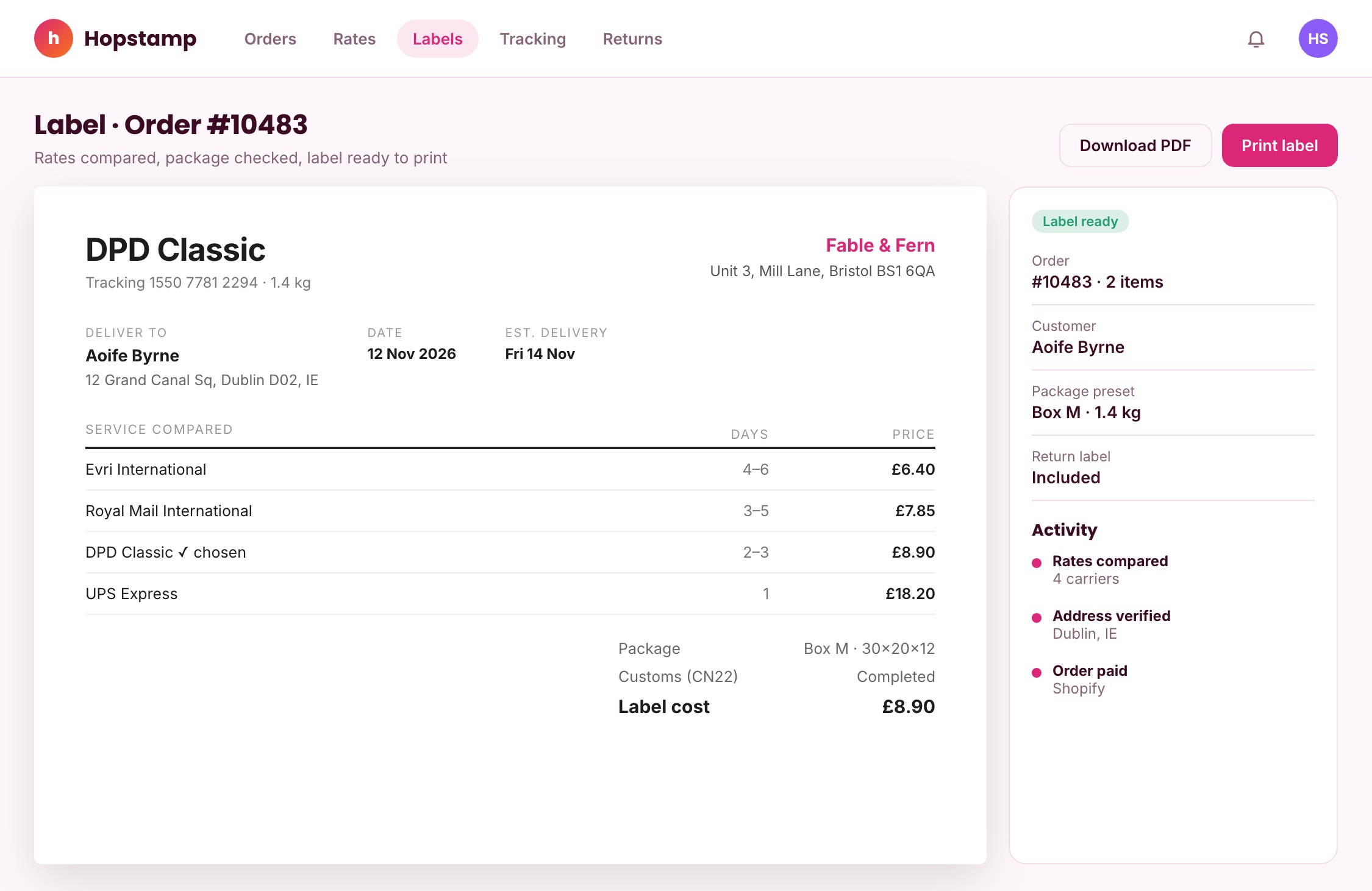
Bring available services and quoted rates beside the reviewed package details. Give staff the details needed to compare options before selecting a carrier rate.
-
2
Keep Label Preparation Linked
Keep addresses, parcel dimensions and weight with the shipment. Let staff review all inputs, chosen service and label status together before preparing the parcel for carrier handoff.
-
3
Tracking Made Clear
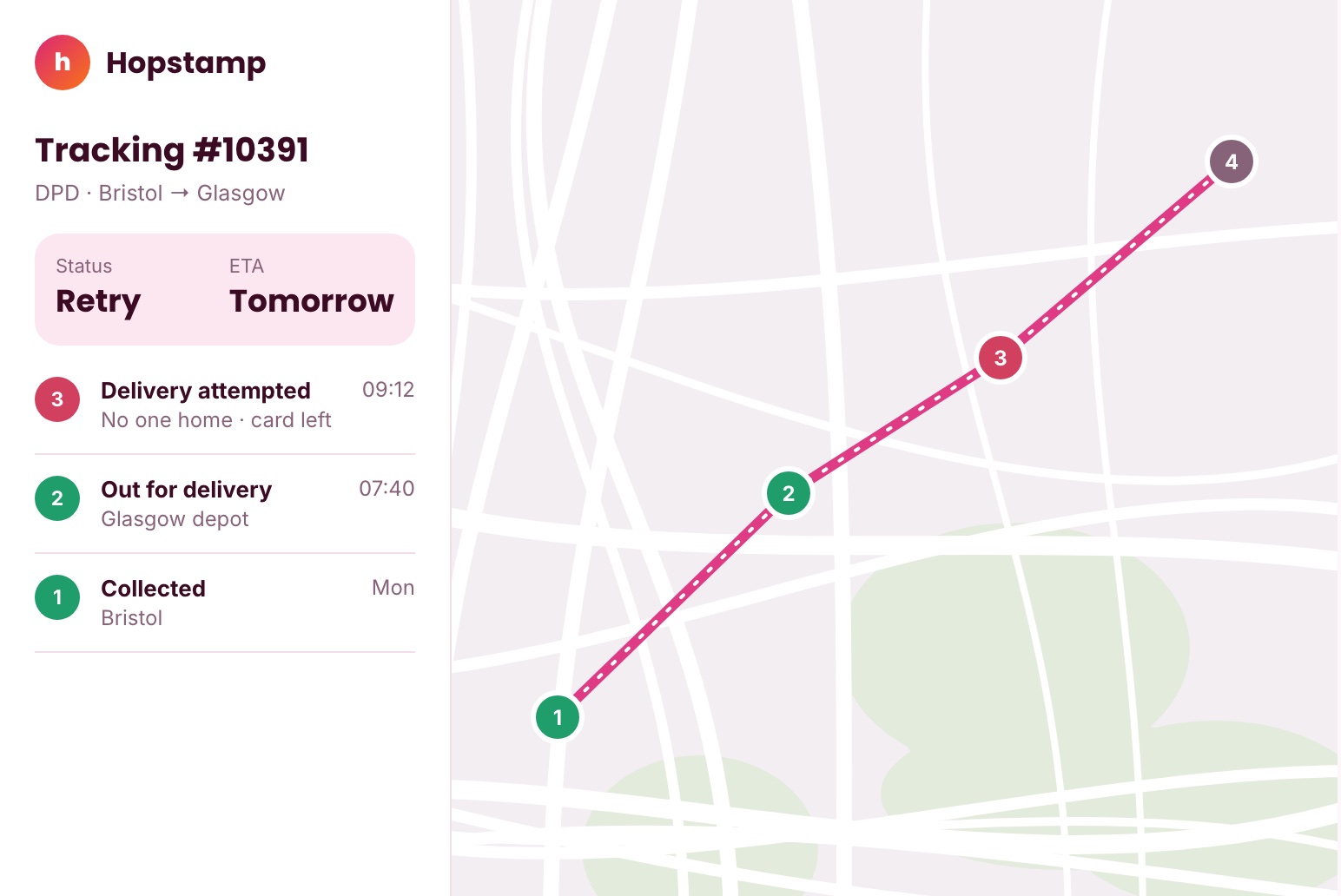
Present carrier tracking events with order and shipment references. Keep the event history visible so support staff can review the latest update before replying to customers.
-
4
Tie Returns to Original Shipments
Keep return label details and tracking references with the order. Give teams context to follow the return journey before planning further action.
3
The Outcome
The experience connects carrier choices, label records, tracking events and return details around each shared shipping record.
-
Service Choices
Shipping teams would compare available services against their package inputs. A shared selection record could help them revisit the rate and service before preparing a label.
-
Label Review Steps
Staff would review package and address details alongside label status. Shipment-linked records could help them find the label linked to an order before preparing the handoff.
-
Tracking Views
Support teams would see carrier event history alongside the shipment reference. The current tracking update could guide a reply or investigation without losing order context.
-
Returns With Context
Teams would follow return labels and tracking references from the source order. Linked parcel records could help them review the return’s progress before planning next steps.
4
Value Delivered
Hopstamp connects carrier selection with the labels, tracking and returns behind each shipment:
- Teams would review rates against parcel dimensions.
- Label views would keep carrier services, addresses and parcel data linked to orders.
- Tracking views would retain carrier events with the shipment’s order reference.
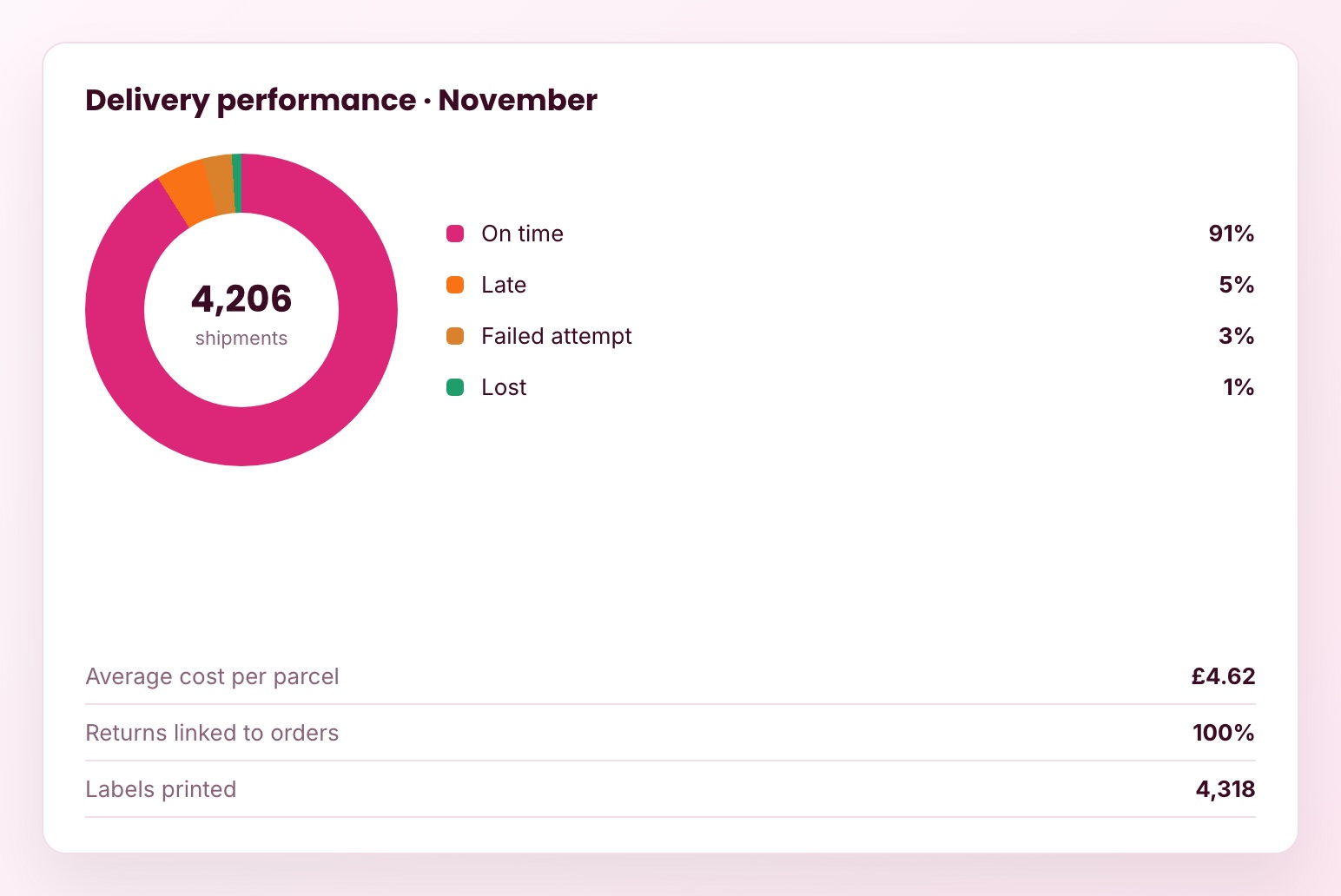
- Context: Return records would retain the original shipment, the label details and tracking history.
- Oversight: Staff would review parcel inputs and service choices before labels move into their workflows.
- Growth: Shared shipping records could support more orders, services and return journeys.
Similar case studies