Connecting Delivery Plans With Drivers and Each Stop on the Route
Connecting delivery routes, driver assignments, job progress and delivery records.
Schedule a Strategy Call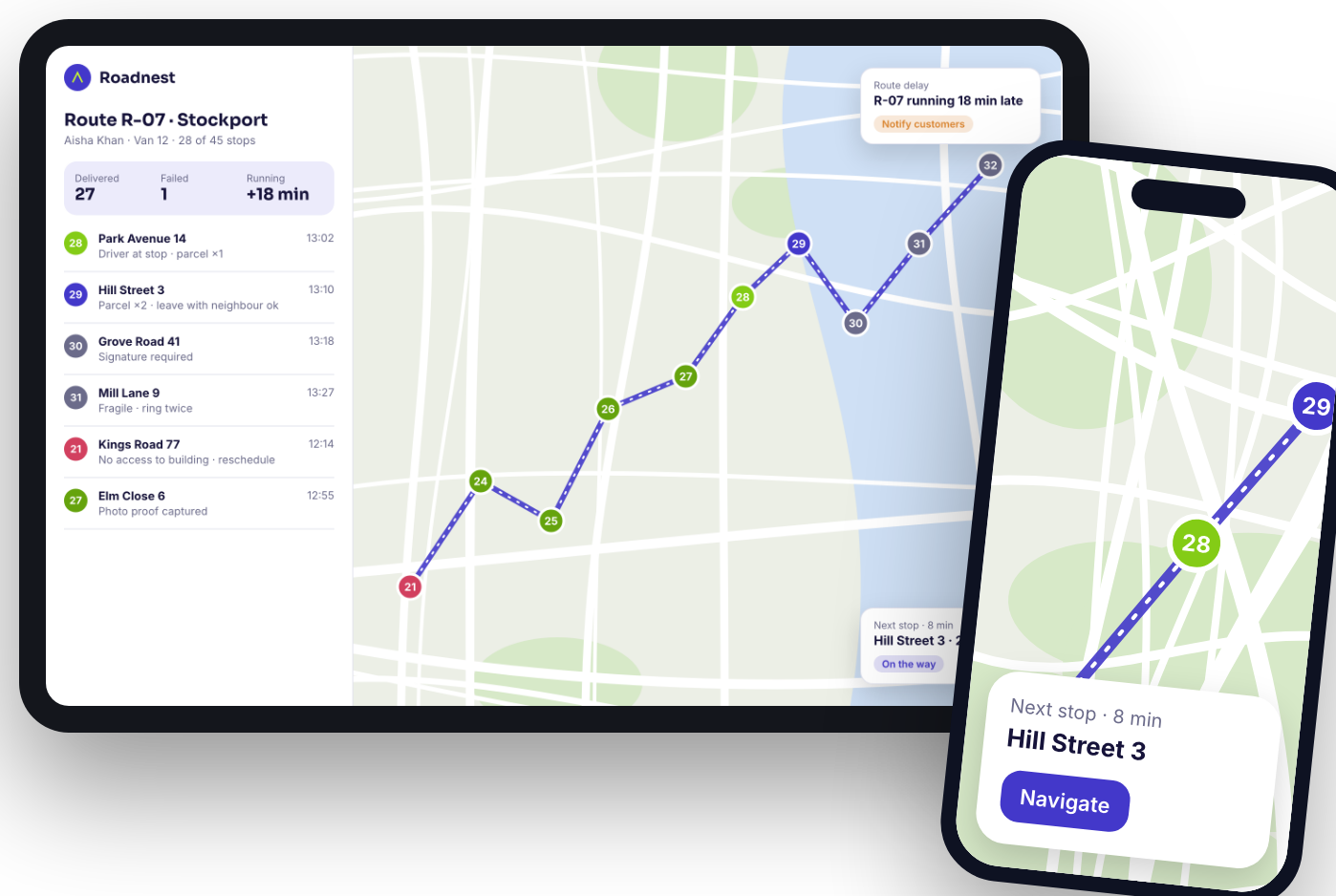
At a Glance
Project name
Roadnest
Industry
Shipping SaaS
Service offered
Product Design Study & Workflow UX Mapping
Roadnest is a last-mile delivery management concept for dispatch and delivery teams. It connects route plans, driver assignments, stop updates and delivery records so teams can follow each task from planning through a delivery outcome.
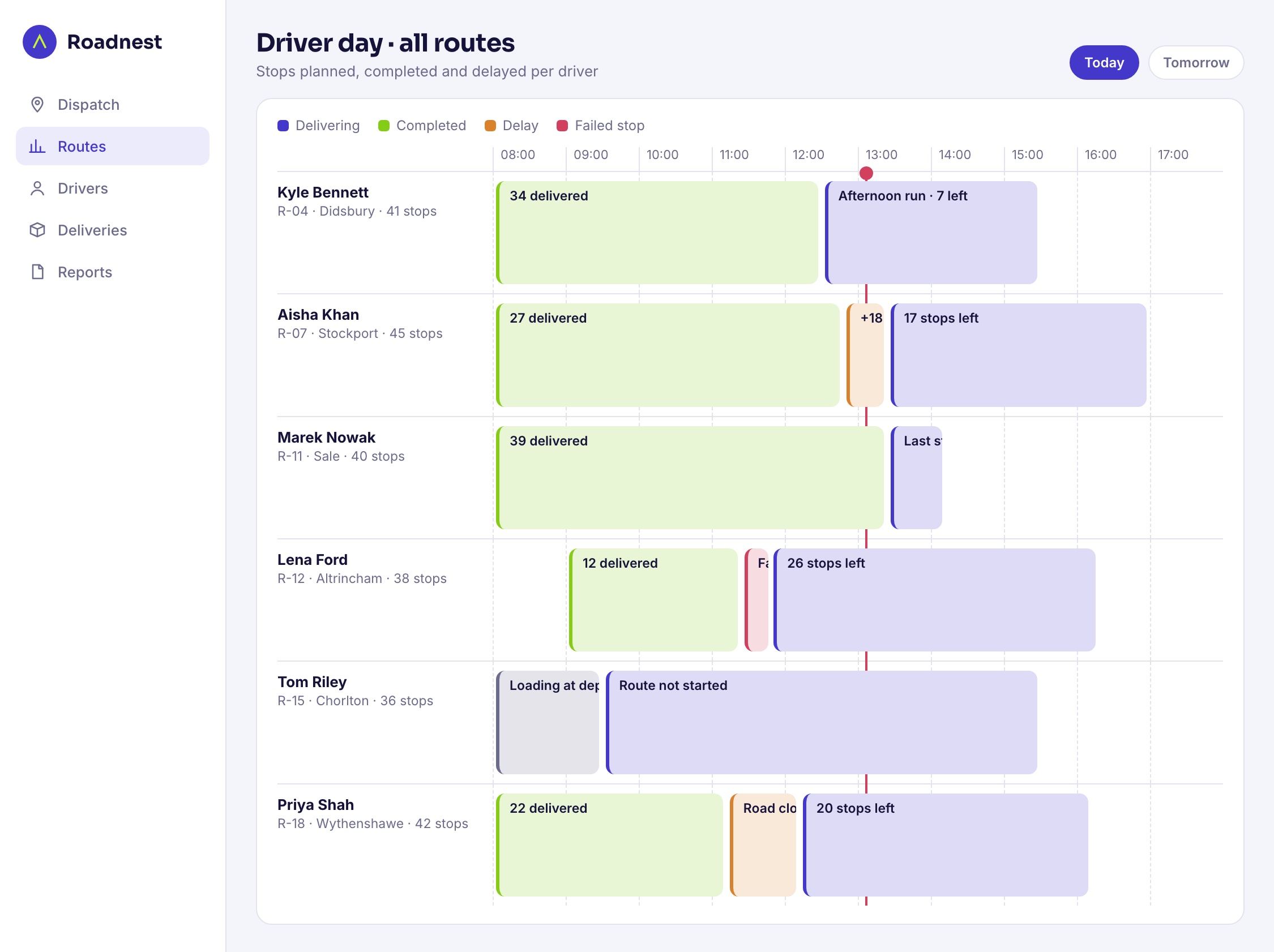
The proposed workspace keeps dispatch decisions connected to driver activity. Teams would review stop requirements, plan routes and assign work, while driver updates, route delays and completion records stay linked to every delivery.
The concept explores how delivery software can retain task and route context as responsibility moves from dispatch teams to drivers and recipients.
1
The Challenge
The brief addresses four delivery gaps: stops across separate sheets, vague driver assignments, route changes hidden in calls and completion records detached from tasks.
-
Fragmented Stop Plans
A list of addresses may omit the needs behind a stop. Dispatchers need time windows, service requirements and route context before assigning.
-
Unclear Assignments
A task can change hands through calls without an assignment record. Dispatchers and drivers need clear ownership and current instructions before departure.
-
Hidden Route Delays
A driver’s location may not explain a delayed stop. Teams need task progress and reported issues before reviewing the route or updating a customer.
-
Completion Without Task Links
A delivery photo or note can lose meaning when it sits apart from the task. Teams need completion status, evidence and delivery reference together before reviewing outcomes.
2
The Approach
The design follows each delivery from plan to review. Shared task records would connect stop requirements, driver assignments, route progress and delivery evidence, with reviewed exceptions.
-
1
Plan Around Each Stop
Keep addresses, time windows and service requirements with every task. Give dispatchers the constraints needed to review a route before assigning delivery work.
-
2
Keep Dispatch Decisions Clear
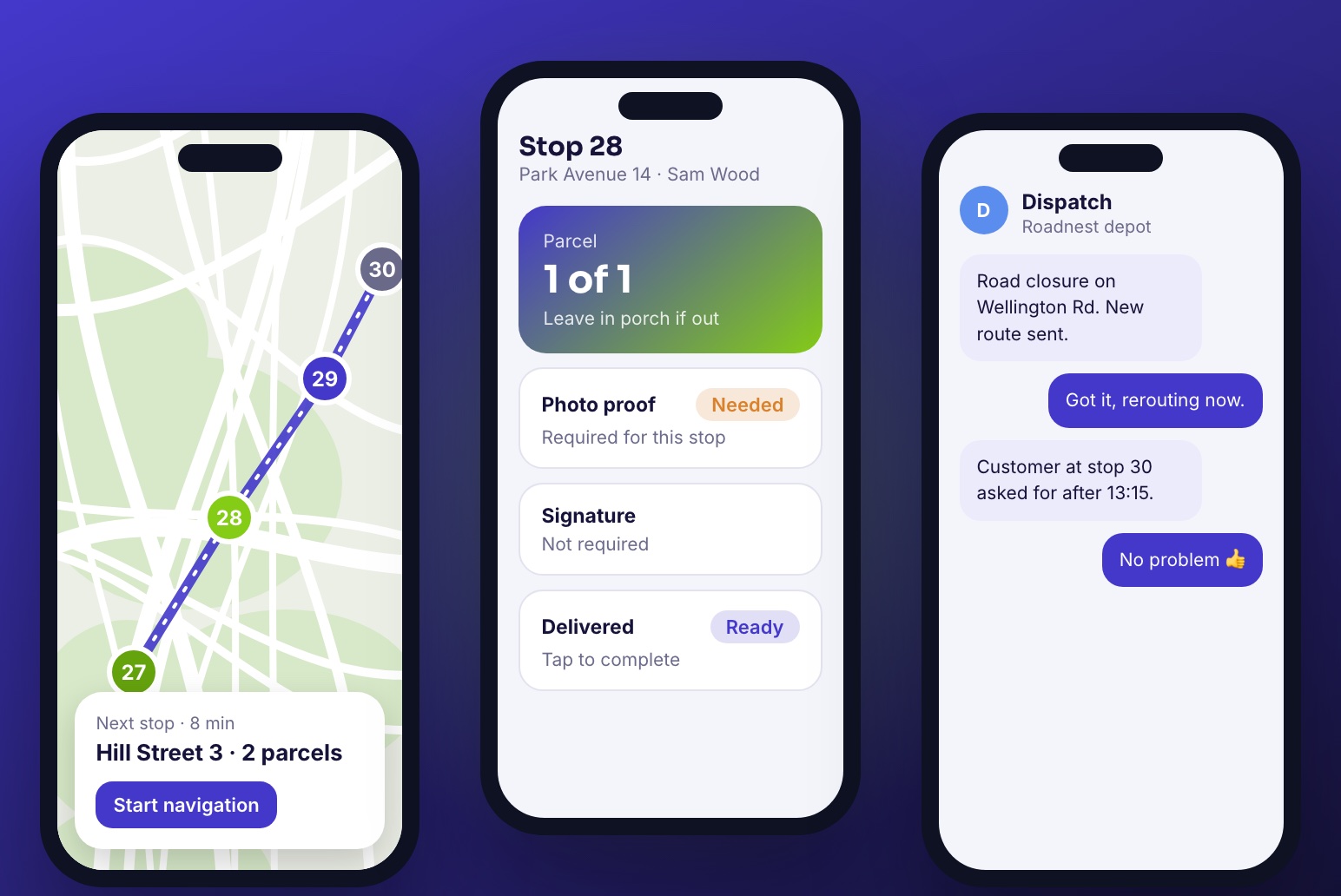
Link each delivery task to its assigned driver and route. Show current instructions and assignment status so dispatchers can coordinate the handoff and drivers can review work ahead.
-
3
View Route Progress
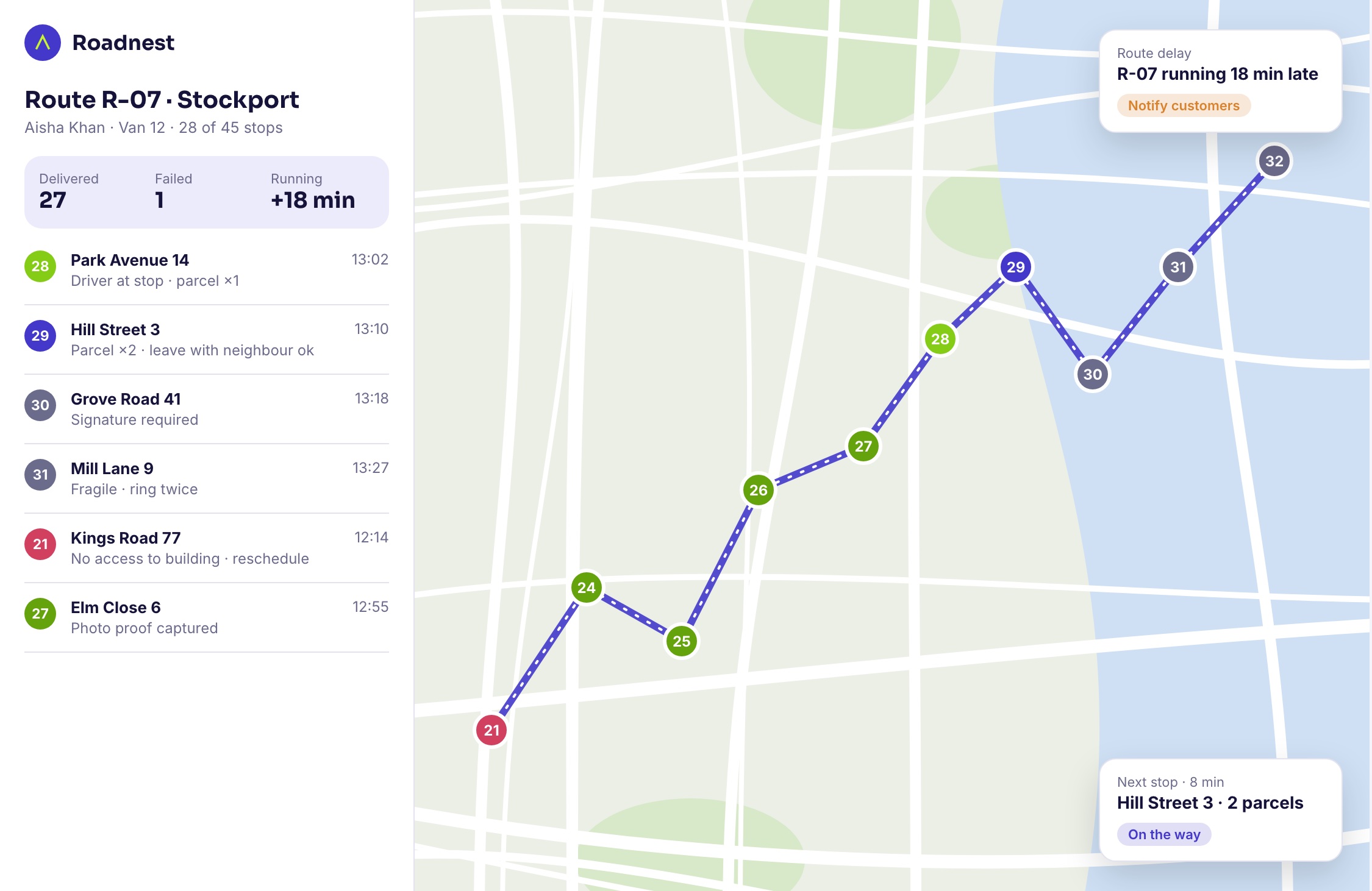
Bring driver location, task progress and route issues in a dispatch view. Keep task context visible so staff can review a delay before adjusting plans or updating recipients.
-
4
Tie Delivery Outcomes to the Task
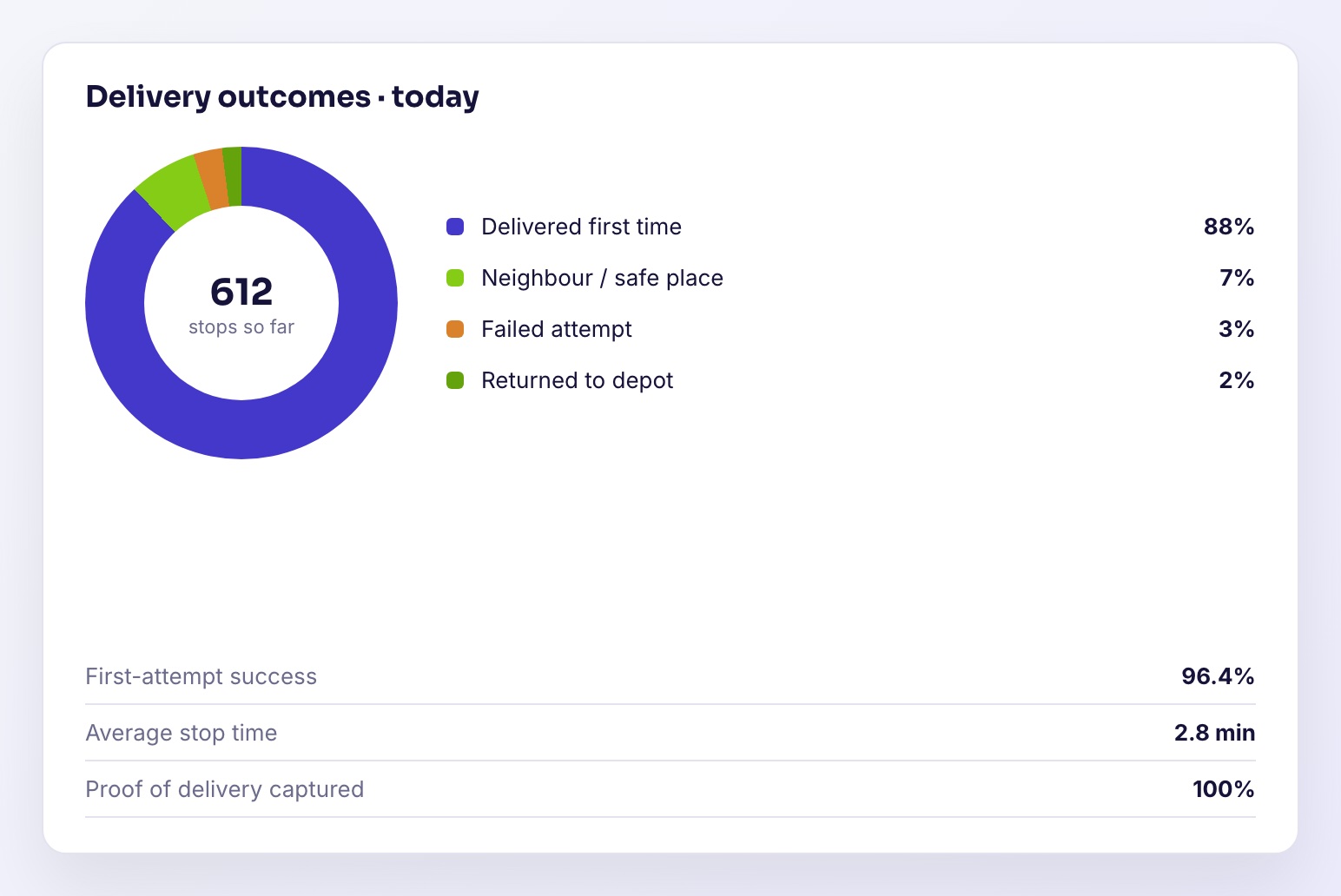
Retain completion status, photos, signatures and delivery notes against the task. Let staff review the evidence before following up on a handoff.
3
The Outcome
The experience connects stop requirements, assigned drivers, route progress and delivery outcomes within a shared task record.
-
Routes in Focus
Dispatchers would review stops with their service requirements and time windows. Task context could help them assess the route plan before releasing delivery work to drivers.
-
Assignment Records
Drivers would see assigned tasks and current instructions. Dispatchers could review the assignment record before coordinating a handoff, reassigning work or clarifying tasks.
-
Route Overview
Dispatch teams would review location and task updates together. Reported issues could help them review a stop’s status when planning a response or discussing delivery delays.
-
Delivery in One View
Teams would review completion status with stored photos, signatures or notes against the task. Linked evidence could help them review an outcome before deciding on follow-up.
4
Value Delivered
Roadnest connects daily delivery planning with the field activity and records behind each stop:
- Dispatchers would review stops against route needs.
- Assignment views would keep drivers, delivery tasks and clear instructions together.
- Progress views would connect driver location with task status and known issues.
- Context: Completion records would retain delivery photos, notes and signatures against their tasks.
- Oversight: Dispatchers would review reported exceptions before changing routes, assignments or the plan.
- Growth: Shared delivery workflows could support more drivers, routes and delivery tasks.
Similar case studies